

Fibre Gallery is the first of its kind in Te Wai Pounamu, a distinctly Moana-focused gallery dedicated to showcasing community-engaged, digital, and heritage artworks by Moana creatives.
Based in the heart of Ōtautahi Christchurch, Fibre Gallery is committed to increasing the visibility of Pacific artists and fostering greater understanding and appreciation of contemporary Pacific art among New Zealanders. By providing resources, opportunities, and a platform to amplify creative voices, we celebrate the richness of Pacific artistry and its role in shaping cultural expression.
Our mission extends to building connections between contemporary Pacific voices and wider social and political conversations, ensuring Pacific creativity plays a vital role in broader narratives.
We proudly acknowledge Ngāi Tūāhuriri iwi as mana whenua of this takiwā and as the rightful custodians of the land on which we stand.
Contact us at: fibregallery@tagatamoana.com
UPCOMING
Between Tree and Tide - Luca Tu’avao Walton @lucidluca
21 August - 2nd October 2026
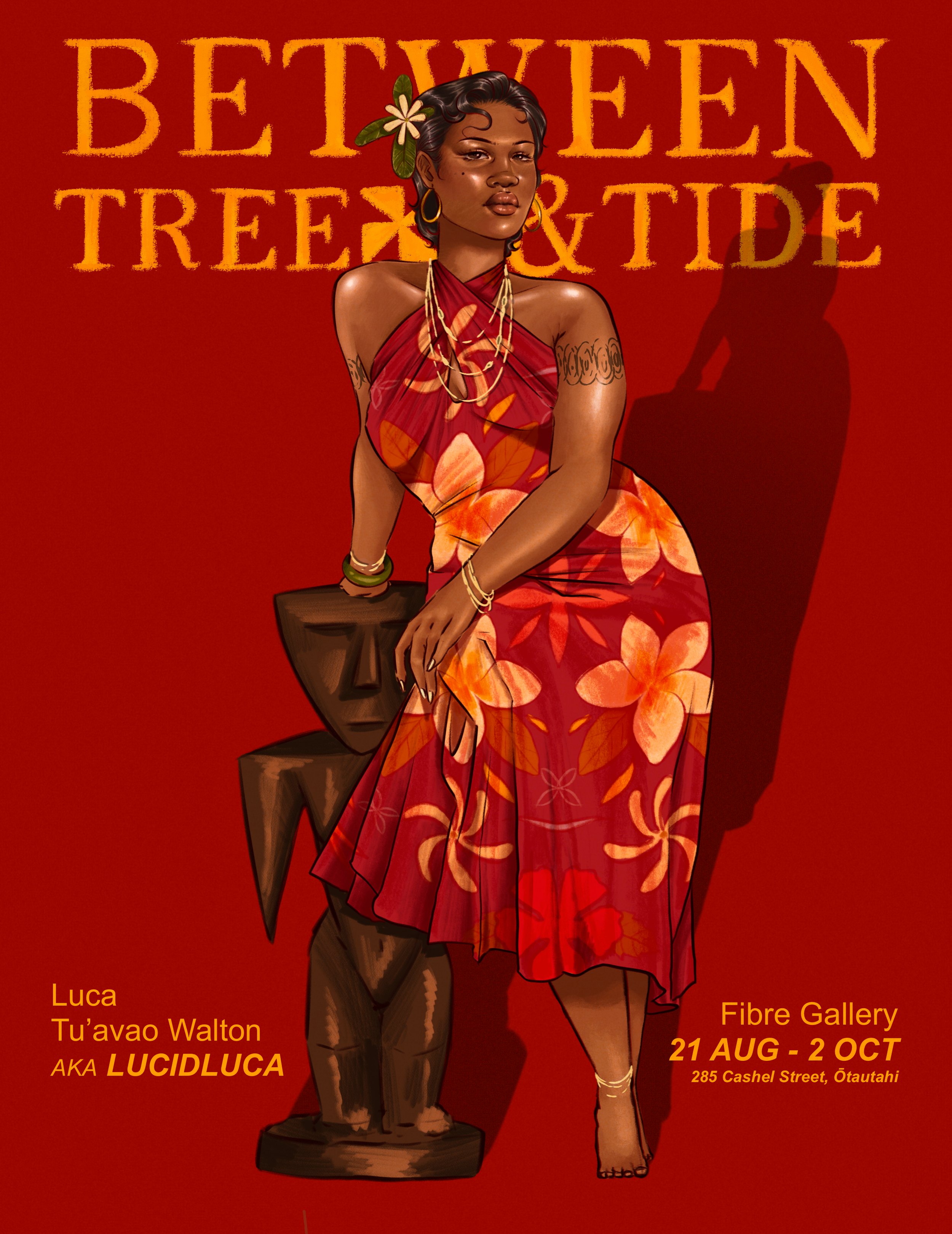
Between Tree and Tide reveals a suspended world of portraiture, memory, and atmosphere. Inthis debut solo exhibition, Luca Tu‘avao Walton aka Lucidluca gathers fragments of feeling, beauty, and imagination into a space that exists somewhere between the familiar feminine and the fantasy. Rather than offering a fixed narrative, the exhibition invites viewers into a shifting environment shaped by their own presence, light and shadows, stillness and movement. Large-scale existing and reimagined portraits inhabit the gallery alongside silhouette forms inspired by significant childhood treescapes from his home in Tonga, allowing shadows to move across the space like echoes of another place. Reflecting on a landscape held through sensation, rather than fully seen. At the centre of his body of work is an altar-like approach to the women, places, and stories that continue to shape the artist’s world. The figures within Luca’s portraiture exist between reality and dream, drawing from the women who raised him while also engaging with the mythology and his childhood imaginations of the moana. Mermaids and other symbolic forms become vessels for ideas of transformation, connection, and belonging. Between Tree and Tide lingers in an in-between state, where memory becomes fluid and meaning remains open. Through portraiture, installation, and sound, the exhibition creates a space of suggestion and return inviting viewers to move through the artist's world where it all meets on a mat under the shade of a tree with a view of the tide rolling in.
Artist Bio
Luca Tu’avao Walton is a Fiji born, New Zealand-based artist of Tongan and Pākeha heritage whose work focuses on portraiture and Pacific identity. While he was raised Lagoon-side in Mataika, Nuku’alofa Tonga, he traces his family to the villages of Lotofoa, Koulo, Holopeka, Pangai, and Lofanga in Ha’apai, and Tefisi in Vava’u. These places continue to inform the people, landscapes, and stories that appear throughout his practice. Working primarily through painting and drawing, Luca creates portraits of Pasifika women that sit between observation and imagination. His work is shaped by family photographs, childhood memories, island environments, and the visual language of contemporary Pacific life. Bold colours and atmosphere play a central role in his illustrations. Luca has developed a strong following for his luminous portraits and contemporary yet vintage inspired approach to Pasifika representation. His practice is concerned with how identity is carried through people, place, and memory, offering intimate reflections on connection, culture, and belonging within a Pacific context.
pAST
‘Aimata Awards 2026
Friday 12th June - Friday 17th July 2026
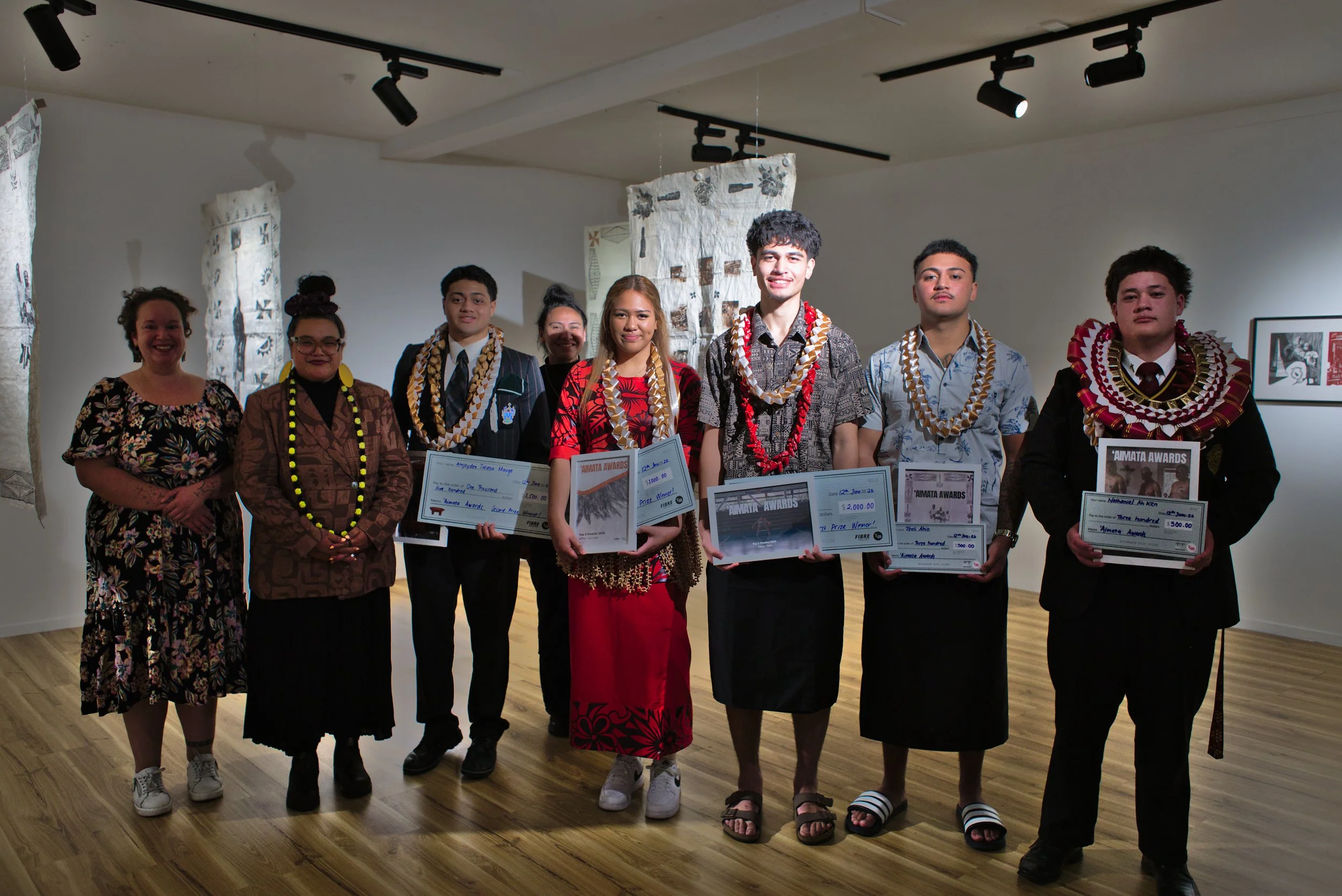
The ‘Aimata Awards celebrate emerging Pacific secondary school artists from across Aotearoa, showcasing bold new voices, storytelling, and creative excellence. The exhibition features the Top 5 selected finalists, with the evening culminating in the announcement of the 1st, 2nd, and 3rd place award recipients.
Congratulations to all of our finalists! Here's to celebrating and championing the next generation of Pacific artists.
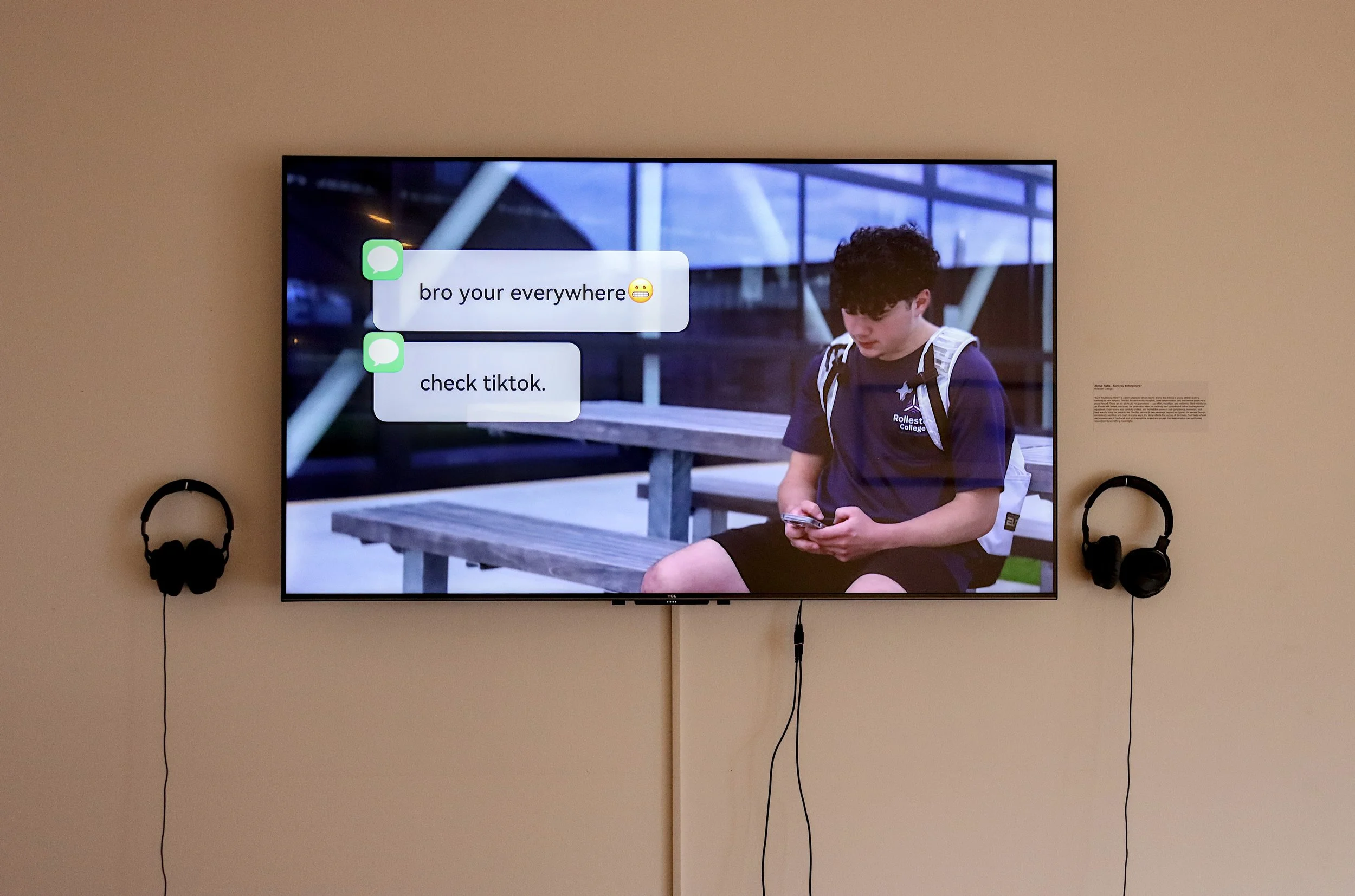
Alatua Tiatia (Rolleston College) — "Sure You Belong Here"
Amjayden Tafatoa Mauga (Dilworth School)
Esther Fukofuka (Cromwell College)
Nathaniel Ah Ken (Liston College) — "My Grandpa and uncles" (after Mark Adams)
Titali Ahio (Liston College) — "famili"
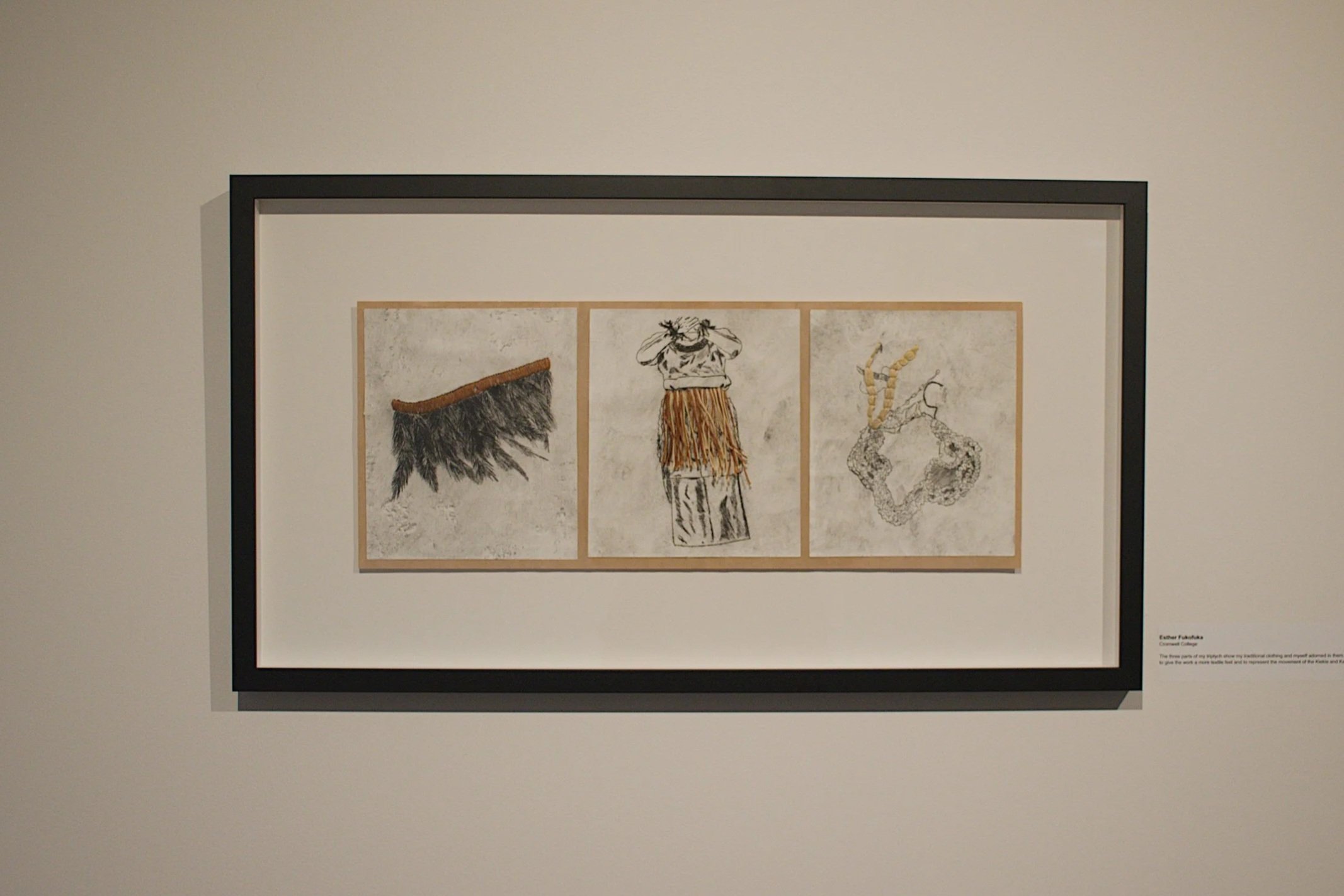
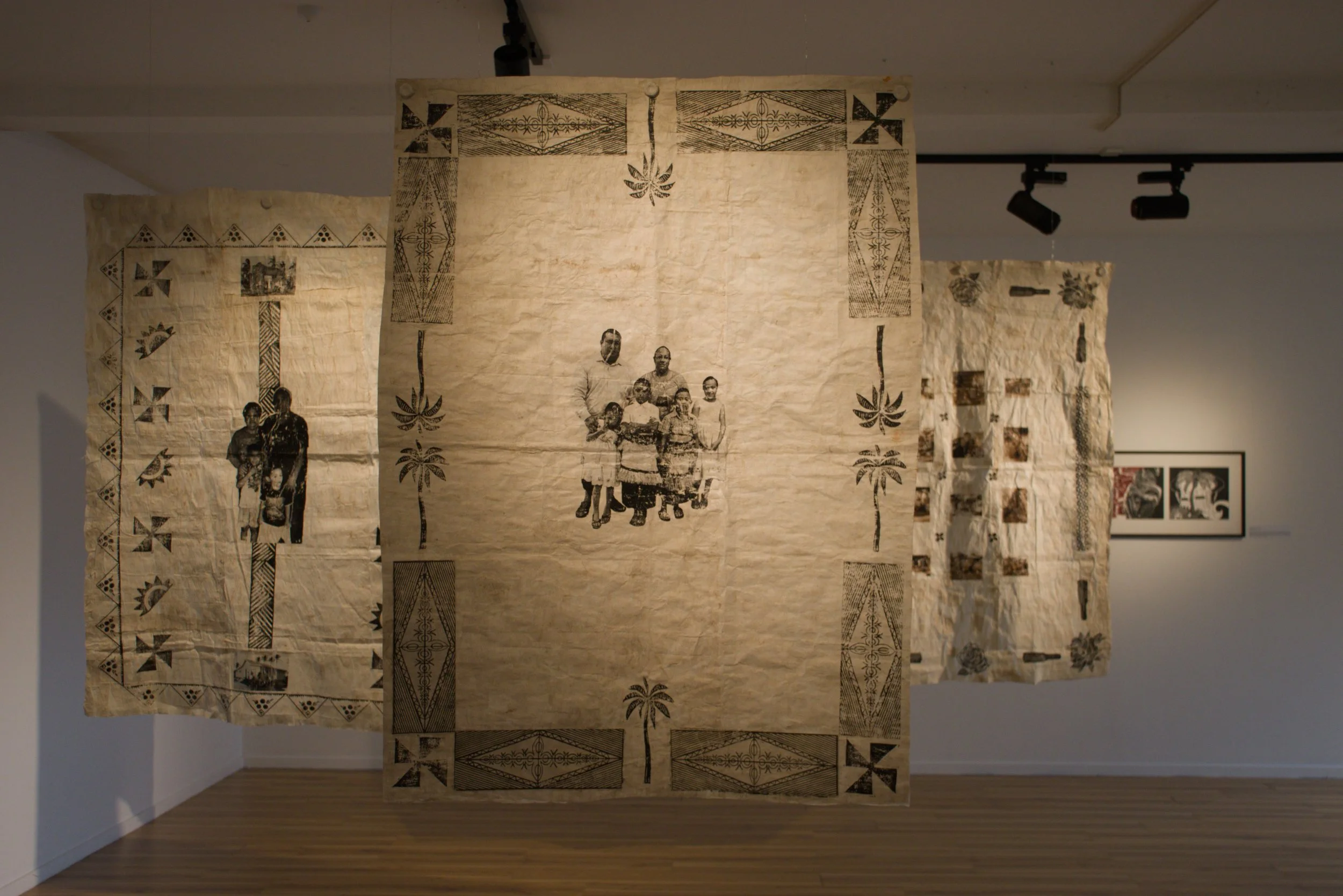
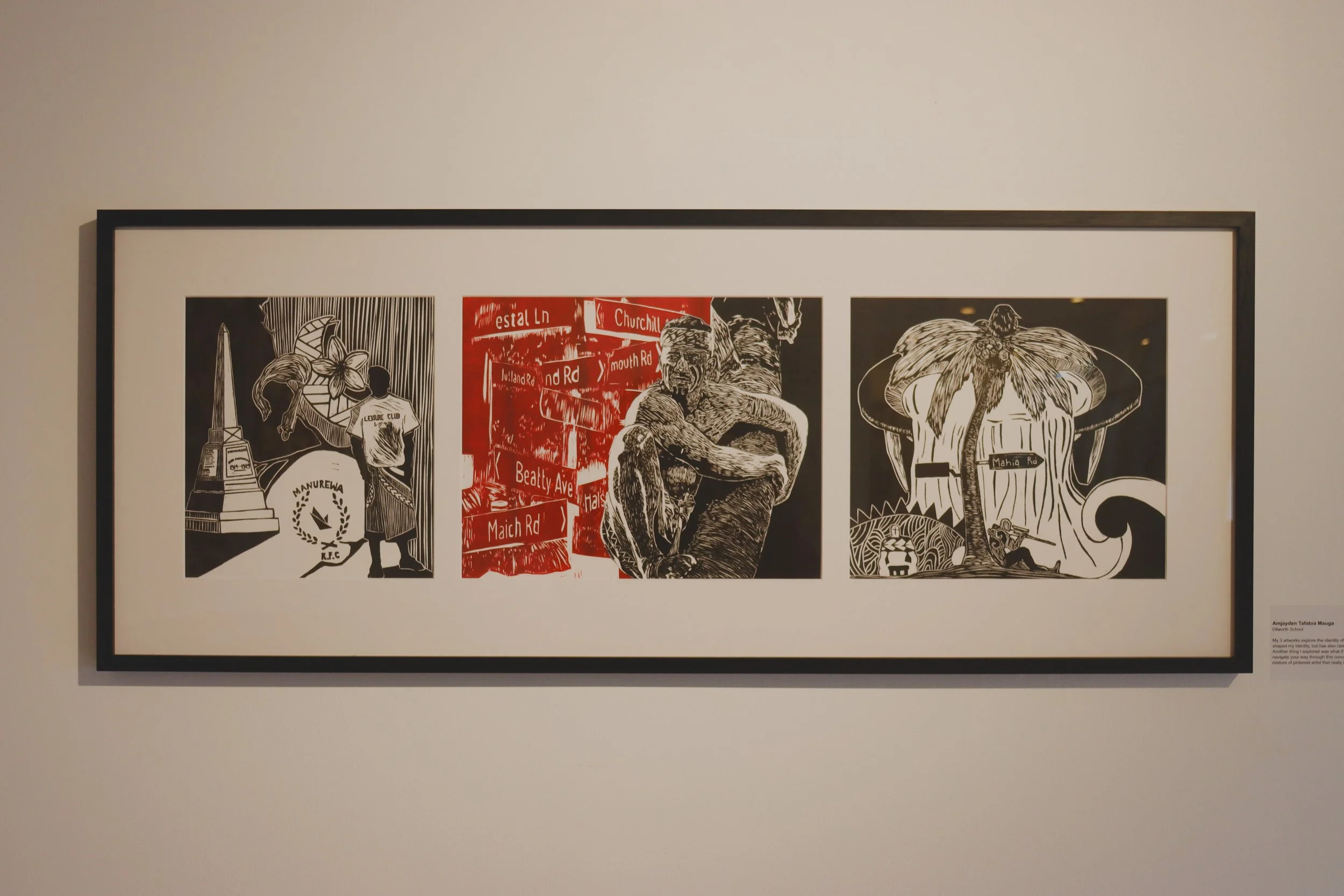
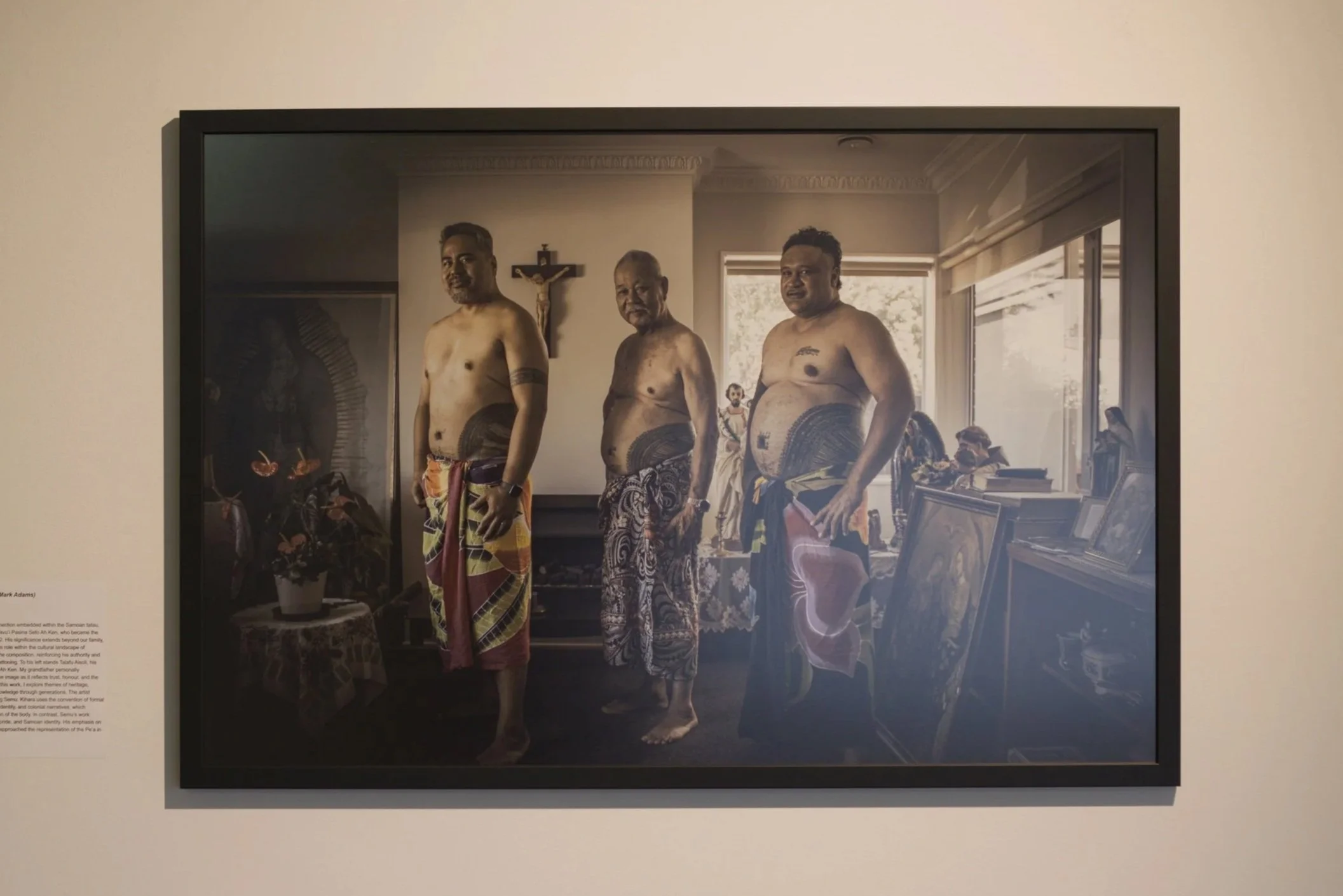
PAST
no place like home - Sione Monū
27 March - 1 May 2026
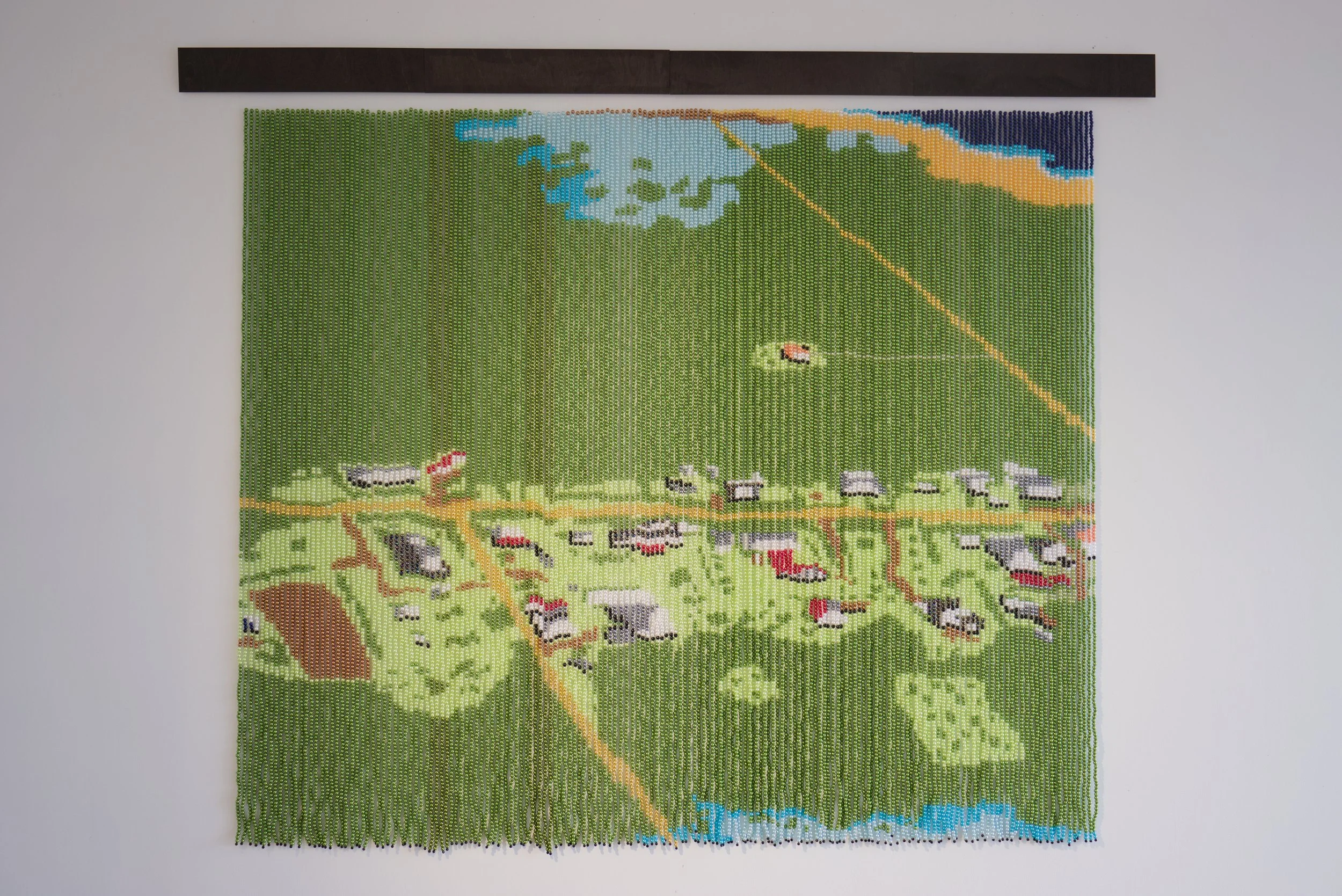
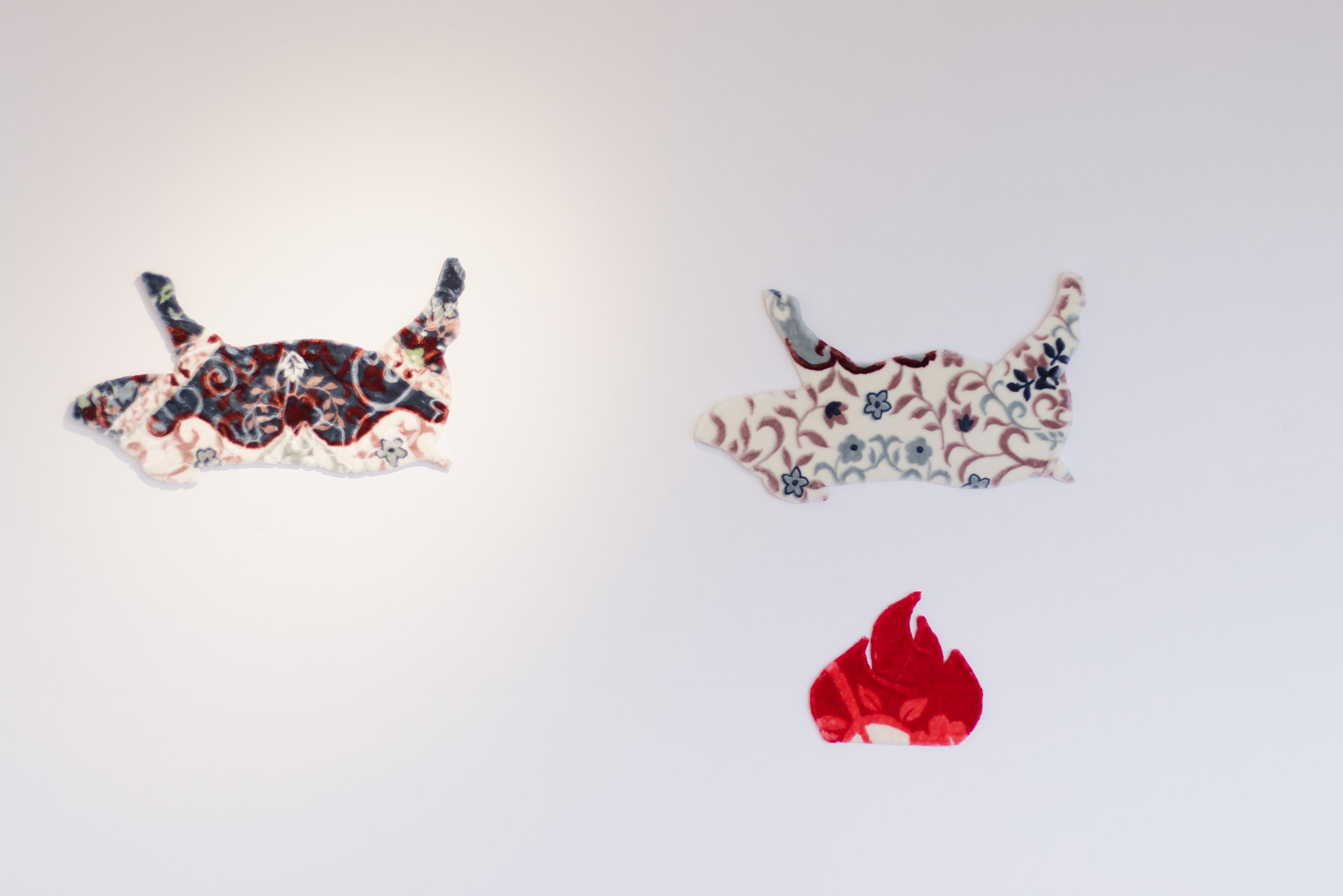
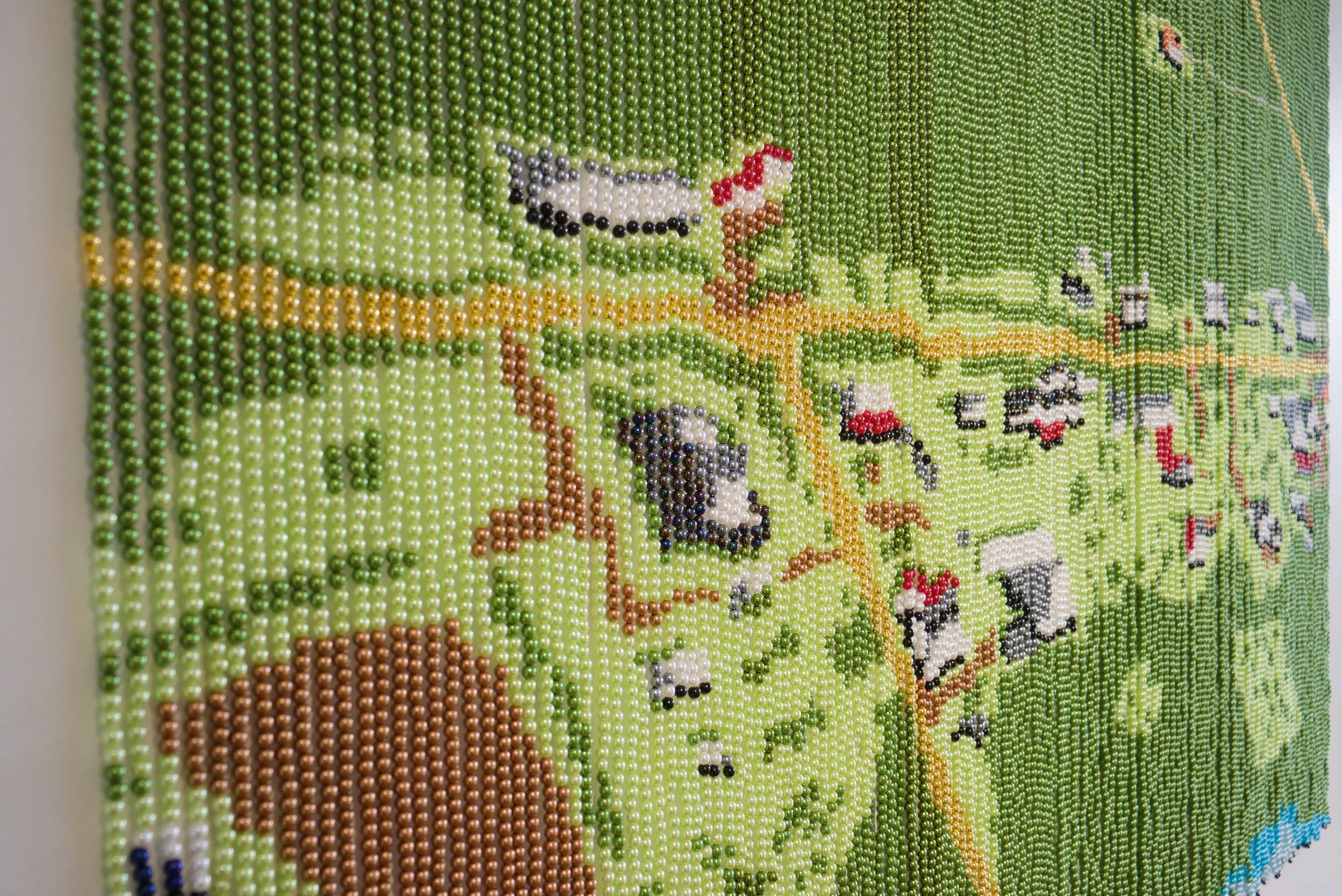
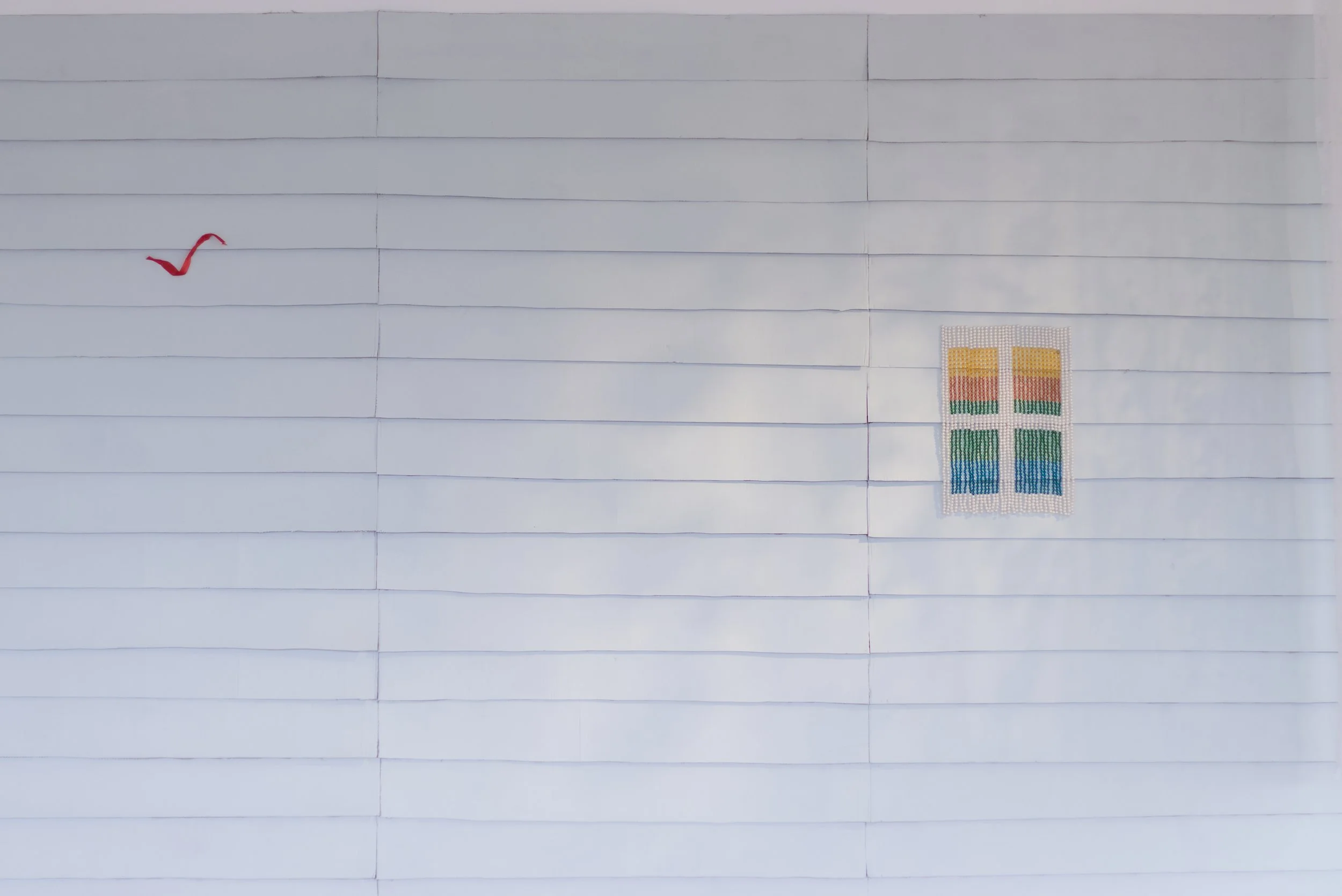
The Yellow Brick Road Our Parents Built
By John Vea
When Sione Monū talks about Yellow Brick Road, they are not simply talking about a village. They are talking about a place that exists through memory, family, and stories. The work depicts Kanokupolu, their father’s village on Tongatapu, Tonga, and began with an image they found through Google Maps shortly after the 2022 Hunga Tonga-Hunga Haʻapai volcanic eruption and tsunami. The satellite image captured the impact of the disaster, showing a landscape where many homes had been destroyed and the familiar surroundings of the village had been transformed by the force of the ocean.
Kanokupolu stretches between two coastlines, and this is reflected in the work through the water represented at the top and bottom of the piece. However, Yellow Brick Road is not simply a reconstruction of what was lost. Instead, Monū rebuilds the village through memory. They place the houses back into the landscape based on their own experiences of visiting Kanokupolu throughout their life. It is not intended to be an exact map, but rather a personal remembering of a place connected to ancestry, family, and belonging. As Monū describes it, the work is “a memory of a memory” (Fibre Gallery, 2024, 1:27).
This idea of memory is important because places are not only made up of buildings, roads, and landscapes. They are also made from the stories and experiences of the people who belong to them. Through Yellow Brick Road, Kanokupolu becomes more than a physical location. It becomes a place carried through generations, remembered through family, and reconstructed through imagination.
The work was exhibited as part of Fibre Gallery’s exhibition no place like home. The title immediately brings to mind Dorothy’s journey in The Wizard of Oz (Fleming, 1939), where she follows the yellow brick road in search of a way home. The yellow brick road becomes more than just a pathway; it becomes a symbol of longing, journey, and the desire to reconnect with a place of belonging. Dorothy’s journey reminds us that home is not always simply a physical destination waiting at the end of the road. Sometimes home is something we discover through the memories, relationships, and experiences we carry with us.
For many Pacific people living away from their ancestral homelands, this idea of home can be complicated. For those of us born in places our parents migrated to, our understanding of home often begins through someone else’s memories. We learn about the homeland through stories told around the dinner table, through family photos, food, language, songs, and the experiences our parents carry with them.
In many ways, our parents create the yellow brick road before us. They build pathways through their own memories and experiences of home, and we follow these pathways trying to understand where we come from. We inherit stories about places we may not have visited, creating images of a homeland that exists somewhere between reality and imagination.
Some of us are fortunate enough to visit the motherland when we are younger and begin creating our own memories of that place. For others, the homeland remains something we imagine through the stories and memories of our parents. We yearn for this “no place like home”, not always as a physical destination, but as a feeling shaped by the places our families remember and the histories they carry.
Like Dorothy following the yellow brick road towards Kansas, we follow the pathways created by those before us. We search for connections to places that have shaped our identity, even when those places may first exist only through stories. The journey is not always about arriving at a specific place, but about understanding how home travels with us.
This connection becomes even more meaningful when we consider the history of Kanokupolu itself. Located in the Hihifo district on the western coast of Tongatapu, Tonga, Kanokupolu holds an important place within Tongan genealogy and history. The name Kanokupolu, meaning “Heart of ʻUpolu,” acknowledges the Samoan ancestry of Ngata, the founding ancestor of the Tuʻi Kanokupolu dynasty. According to Tongan oral traditions, Ngata was the son of Tohuʻia, a Samoan taupou and daughter of the war chief ʻAma of Safata, ʻUpolu. Following conflict in Samoa, Ngata and their followers migrated to Tonga, establishing the Kanokupolu lineage and becoming part of the chiefly history of Tonga. This history reflects the long connections between Tonga and Samoa, showing how migration, genealogy, and relationships have always shaped Pacific identities (Bott, 1982; Māhina, 1992; Rutherford, 1977).
The story of Kanokupolu is itself a story of movement and connection. It reminds us that Pacific histories have always been shaped by journeys across oceans, by people carrying knowledge, relationships, and memories with them. In this way, Monū’s Yellow Brick Road connects personal memory with a much larger story of migration and belonging.
Through this work, Monū is exploring how people carry home with them. Home is not always a place we simply return to. It can be something we create through memory, storytelling, and connection. Like Dorothy following the yellow brick road, we are guided by the stories and experiences of those who came before us. The road may lead us back to ancestral lands, but it also leads us towards a deeper understanding of who we are.
In The Wizard of Oz, Dorothy eventually discovers that the place she was searching for was connected to what she already carried within herself. In a similar way, Pacific diaspora communities discover that home is not only found in a physical location. It exists in our relationships, our memories, our ancestors, and the stories that continue to travel with us.
Monū’s Yellow Brick Road is therefore more than an image of Kanokupolu. It is a pathway between past and present, between ancestral memory and lived experience. It reminds us that places can survive through the people who remember them, and that home can travel across oceans, generations, and stories.
References
Bott, E. (1982). Tongan society at the time of Captain Cook’s visits: Discussions with Her Majesty Queen Salote Tupou. The Polynesian Society. Fibre Gallery. (2024). Interview with Sione Monū discussing Yellow Brick Road [Unpublished video]. Fibre Gallery. Google Drive. Fleming, V. (Director). (1939). The Wizard of Oz [Film]. Metro-Goldwyn-Mayer. Māhina, ʻO. (1992). The Tongan traditional history Tala-e-Fonua: A vernacular ecology-centred historico-cultural concept. The Journal of the Polynesian Society, 101(3), 289–305. Rutherford, N. (1977). Friendly Islands: A history of Tonga. Oxford University Press.
pAST
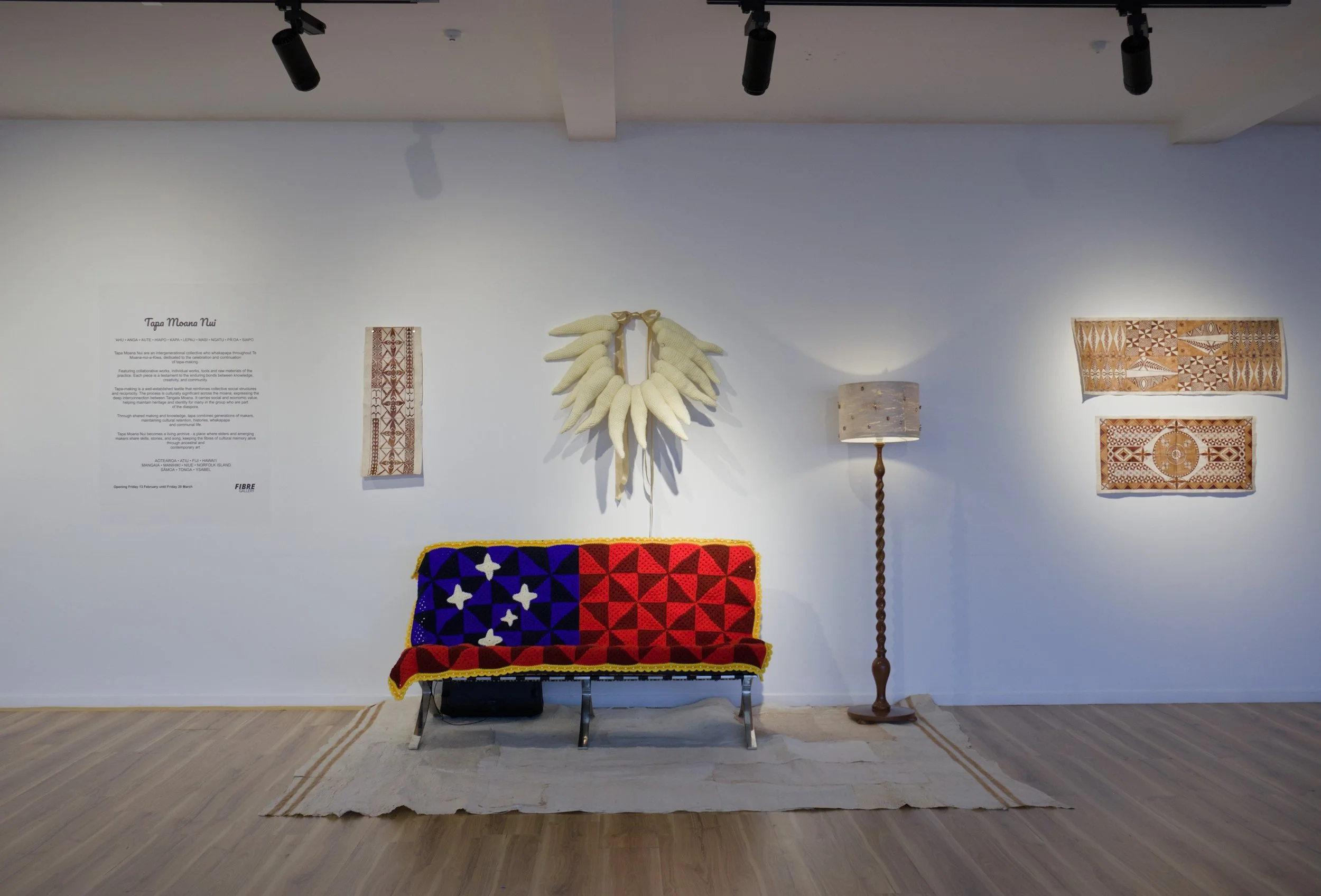
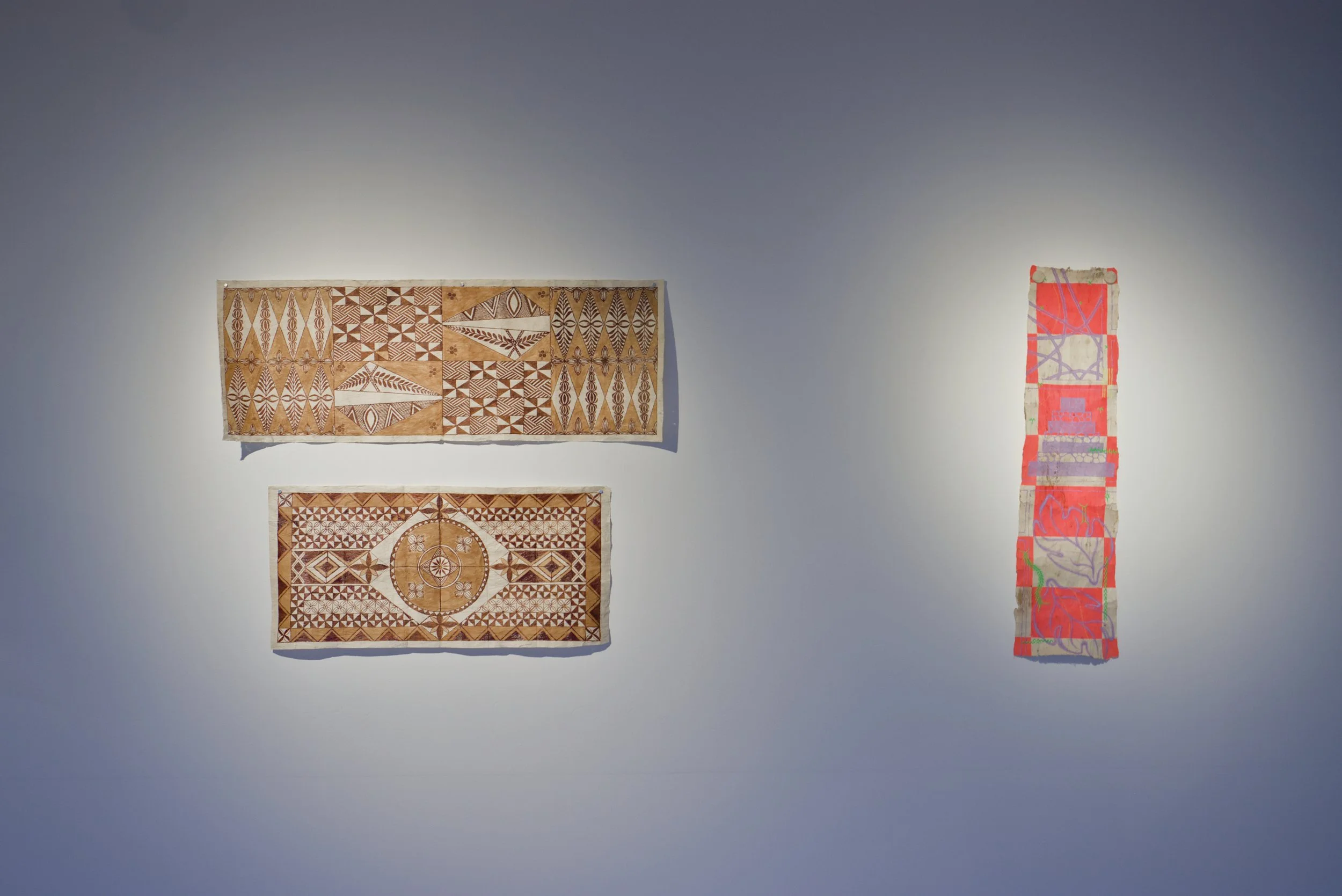
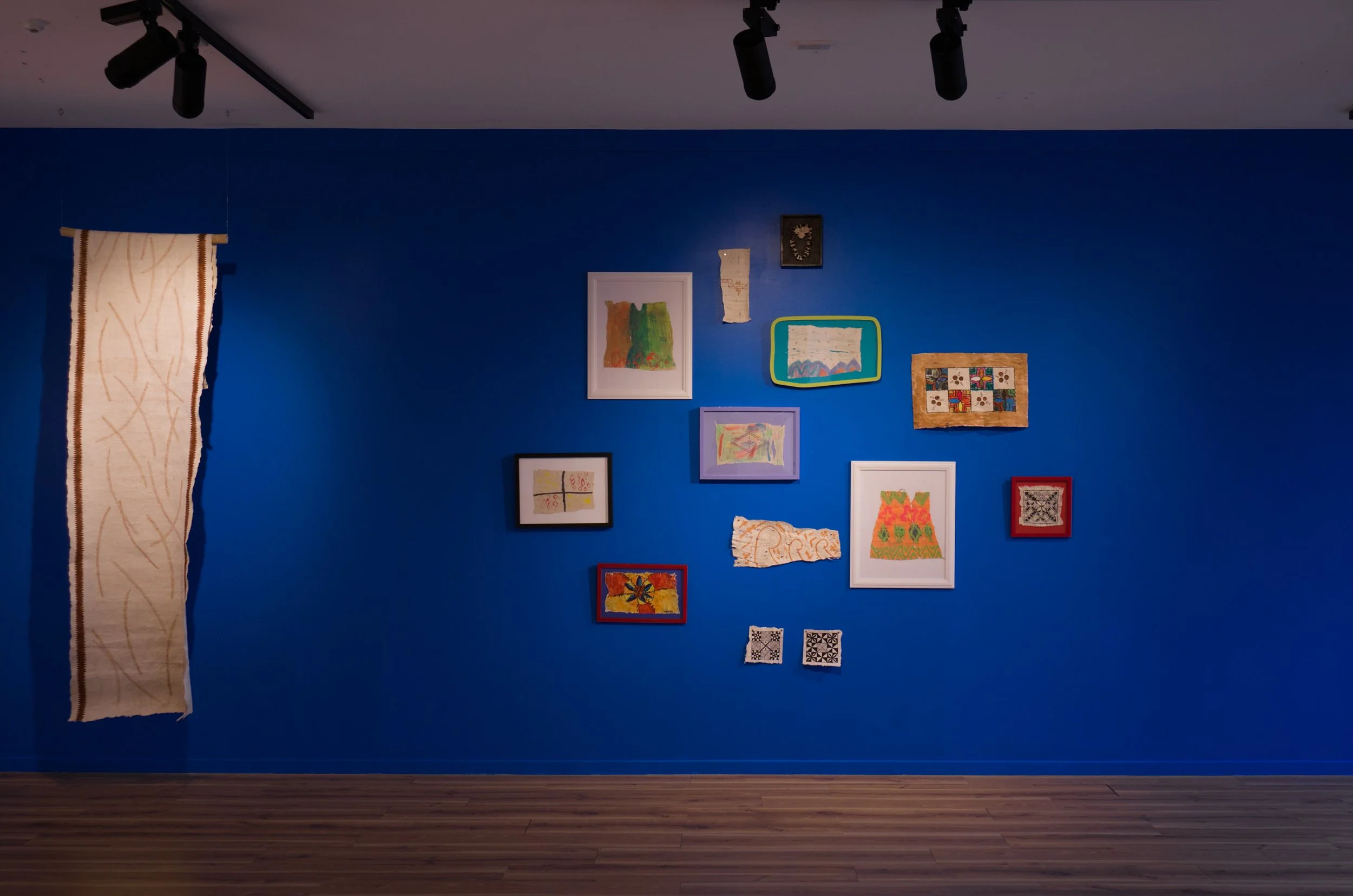
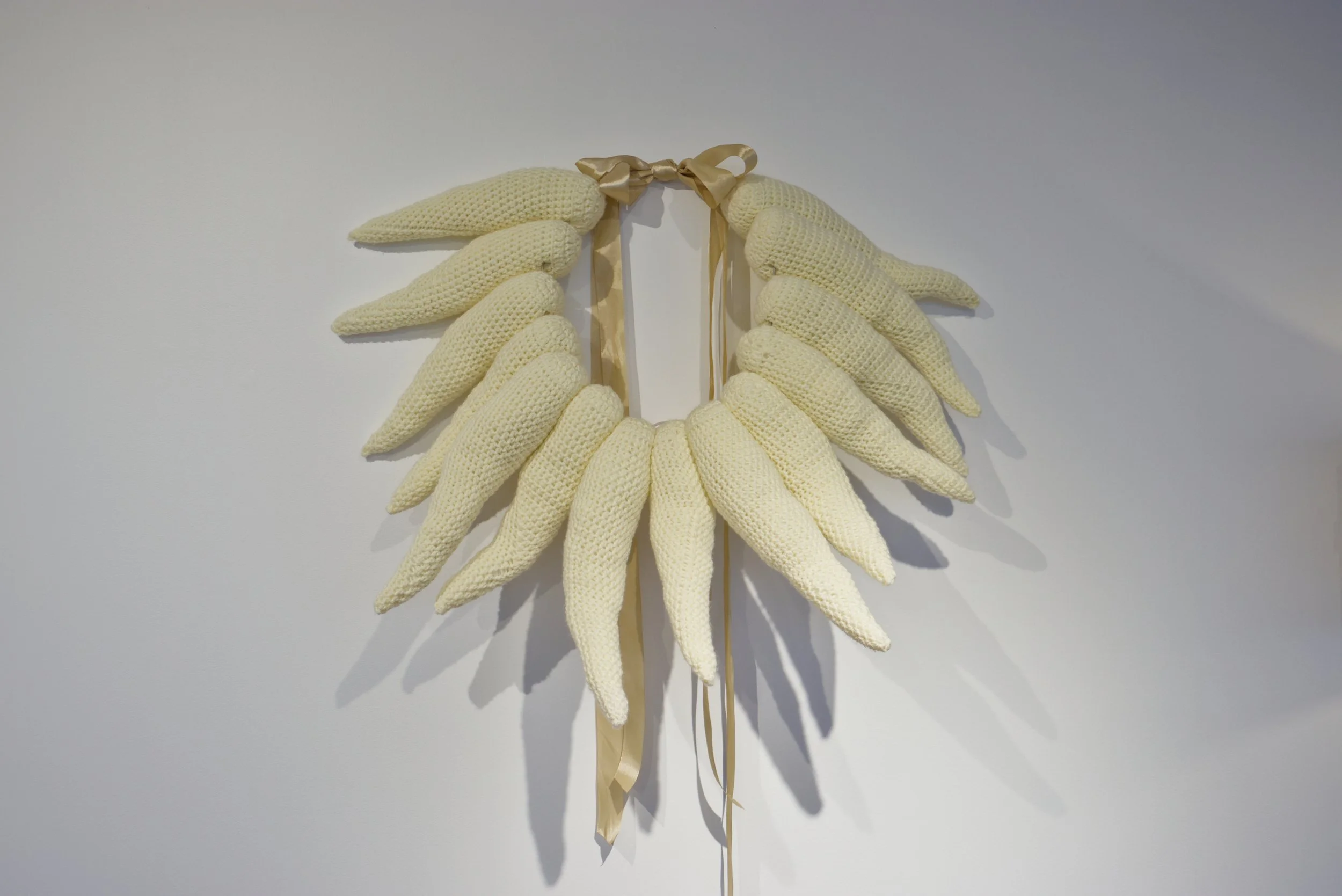
Tapa Moana Nui
13 February - 20 March 2026
Artist Statement
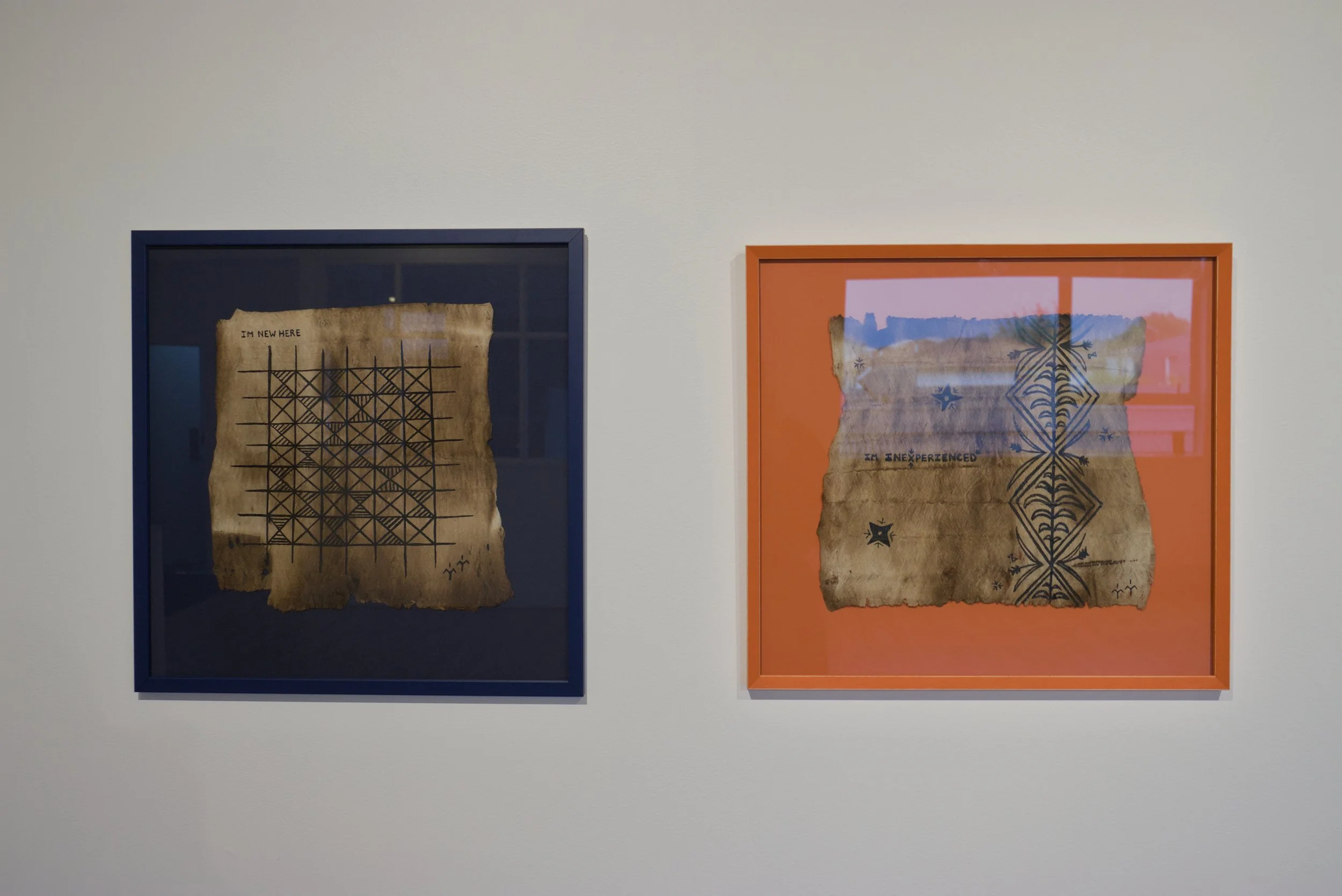
Tapa Moana Nui are an intergenerational collective who whakapapa throughout Te Moana-nui-a-Kiwa, dedicated to the celebration and continuation of tapa-making. Featuring collaborative works, individual works, tools and raw materials of the practice. Each piece is a testament to the enduring bonds between knowledge, creativity, and community.
Tapa-making is a well-established textile that reinforces collective social structures and reciprocity. The process is culturally significant across the moana, expressing the deep interconnection between Tangata Moana. It carries social and economic value, helping maintain heritage and identity for many in the group who are part of the diaspora. Through shared making and knowledge, tapa combines generations of makers, maintaining cultural retention, histories, whakapapa and communal life. Tapa Moana Nui becomes a living archive - a place where elders and emerging makers share skills, stories, and song, keeping the fibres of cultural memory alive through ancestral and contemporary art.
past
Manu o le Parataiso | Ana Teofilo
28 November 2025 - 30 January 2026
Artist Statement
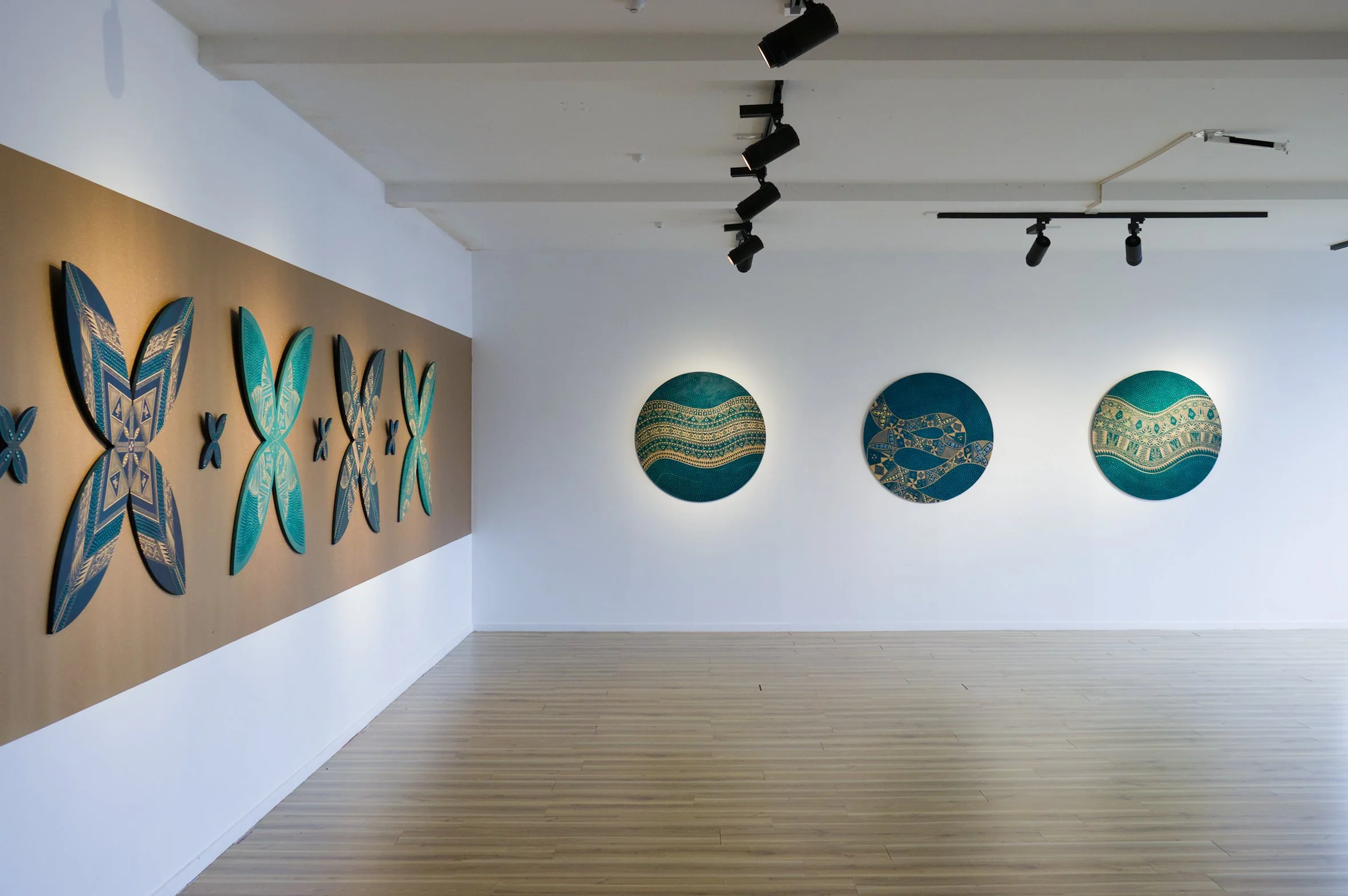
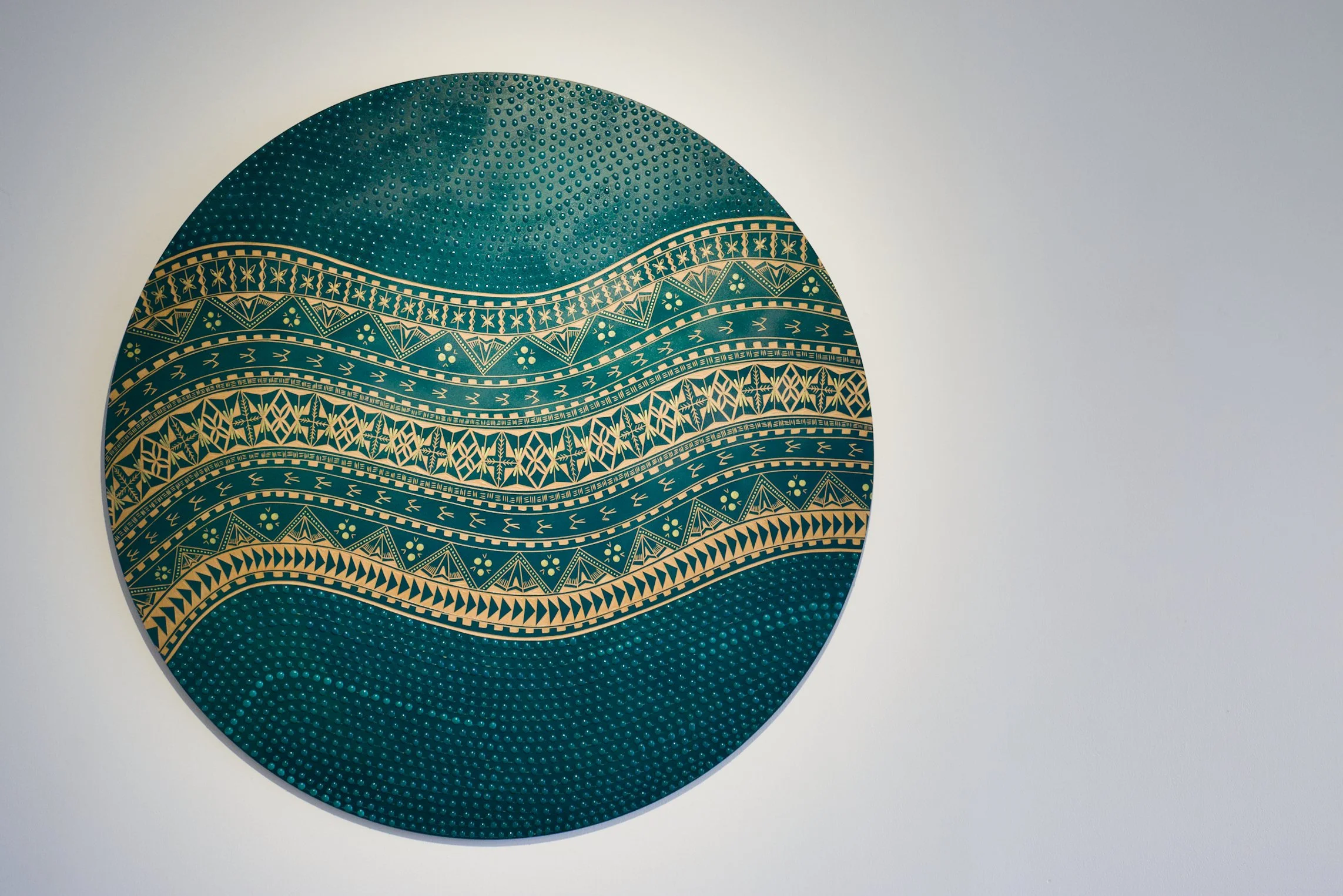
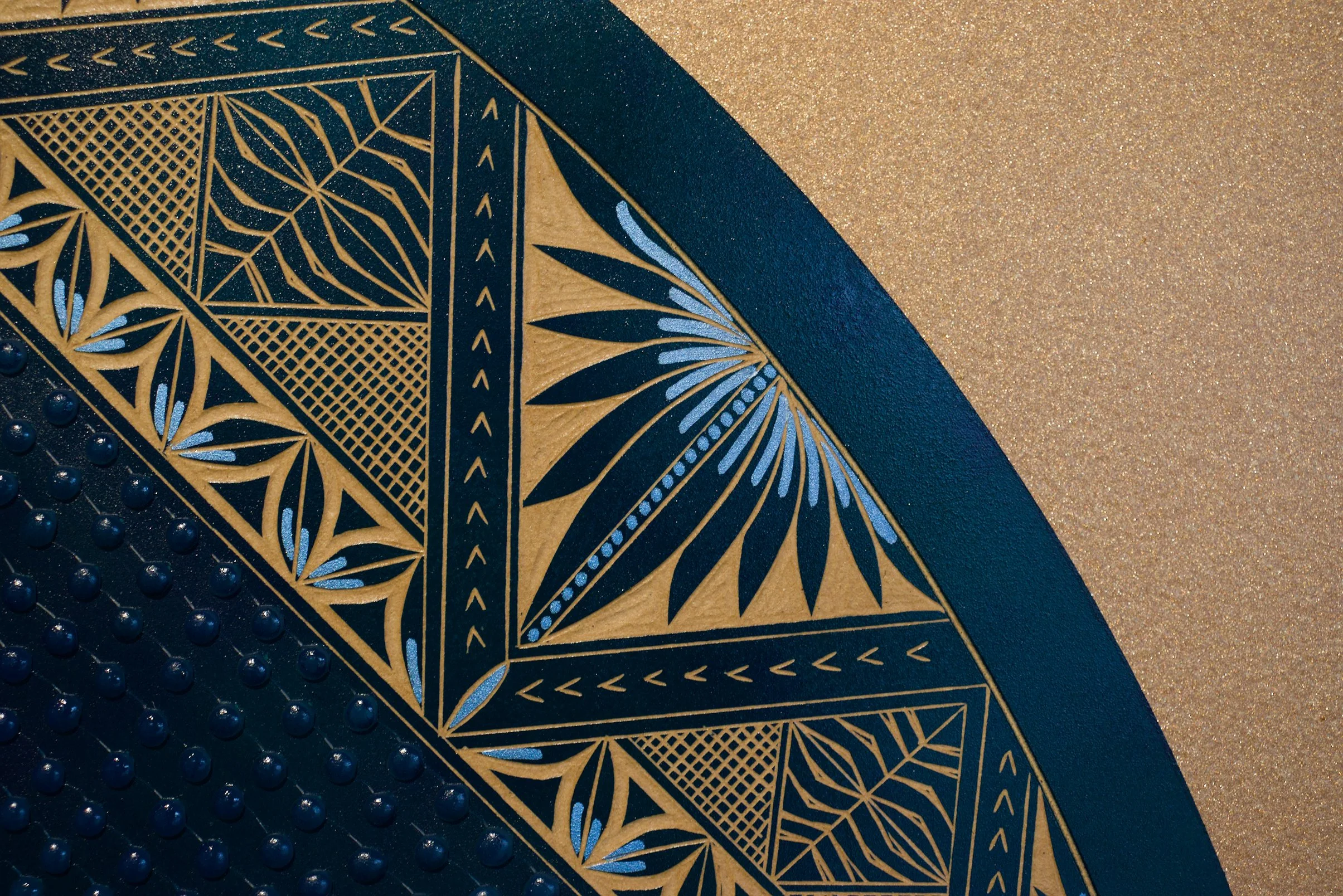
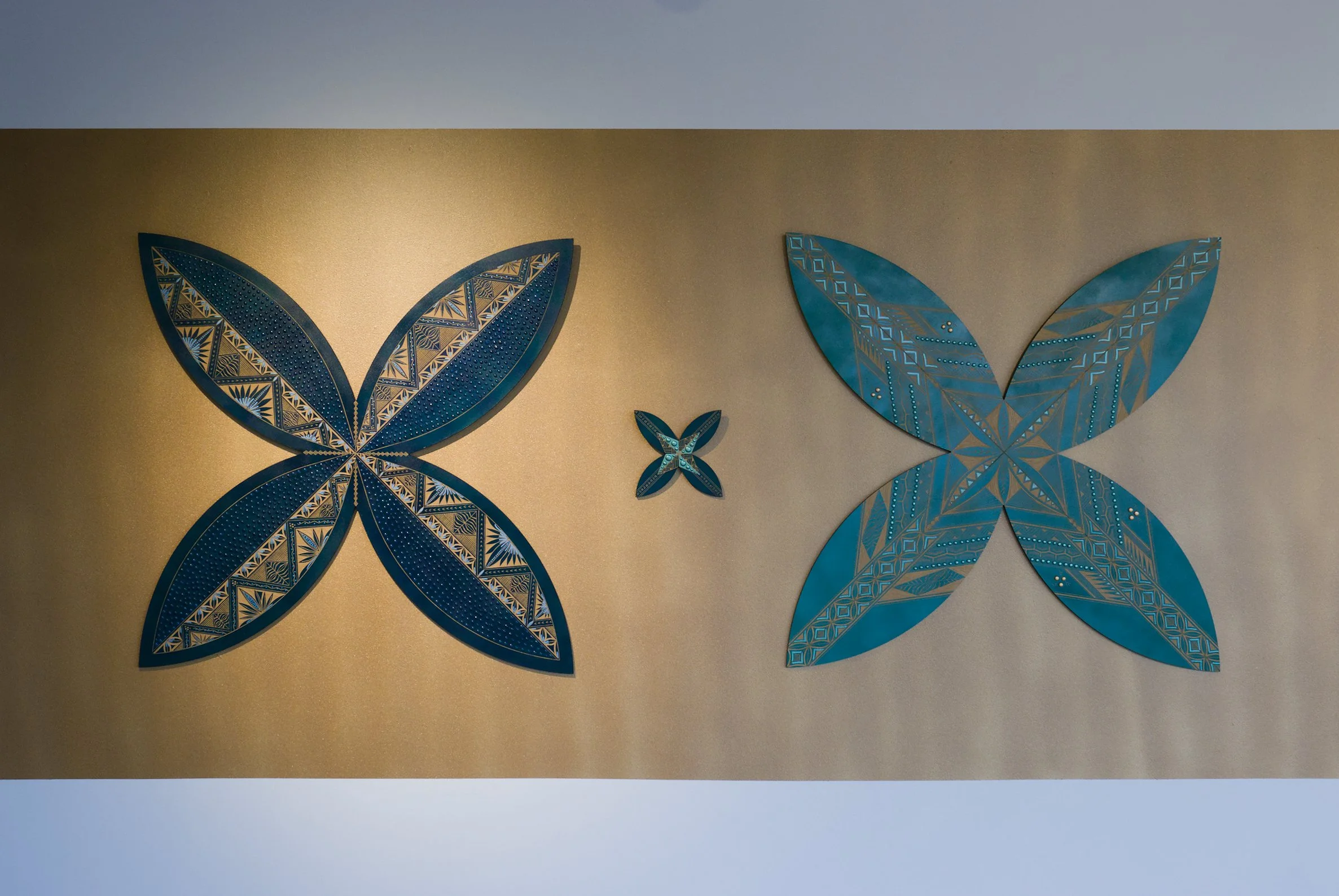
Manu o le Parataiso (Birds of Paradise) traces my personal and creative journey through the symbolic footprint of the Pacific Golden Plover. This distinctive form, often mistaken for a frangipani, has become a recurring motif within my work, a visual language that speaks of my family’s journey and as my guiding spirit. The tuli manu (Pacific Golden Plover) is a migratory bird that travels vast distances across the Pacific Ocean, returning home season after season. Its resilience and sense of direction mirror my own path as an artist and as a daughter of Sāmoa, grounded in heritage yet constantly navigating new horizons. Through shades of teal that flow across these works, I honour the ocean that carried my parents from Sāmoa to Aotearoa. This colour embodies both journey and belonging, and the ever-shifting waters that connect islands, people, and generations. Each mark, layer, and carved motif becomes a pathway, tracing the evolution of identity and the stories that shape who I am today. The glue dot textures that appear throughout the works hold deep symbolic meaning. They speak to the threads of connection between ancestors and descendants, between memory and place. They mark milestones, embody the strength of community, and shimmer like when sunlight hits the sea. Manu o le Parataiso is an exploration of movement, migration, and memory, a celebration of the beauty found in our footprints, both seen and unseen. It is a tribute to my parents’ journey, my children’s future, and the spaces in between where stories take flight.
past
Kūkulu Hale Kūlulu Kaiaulu | Tiana Te Rongopatahi Mo’iha
Monday 13th October - Friday 21st November 2025
Tiana is a multifaceted cultural practitioner, educator, musician, artist, creator, actor, and community leader dedicated to preserving and sharing the rich heritage of Hawai‘i, Moananuiākea, and all Indigenous peoples. As founder and CEO of Indi-Genius Minds, she develops innovative educational tools and programmes that reconnect people with nature, culture, and identity. Her work blends Indigenous knowledge and ancestral wisdom with contemporary practice to foster a deep appreciation for Indigenous cultures and values.
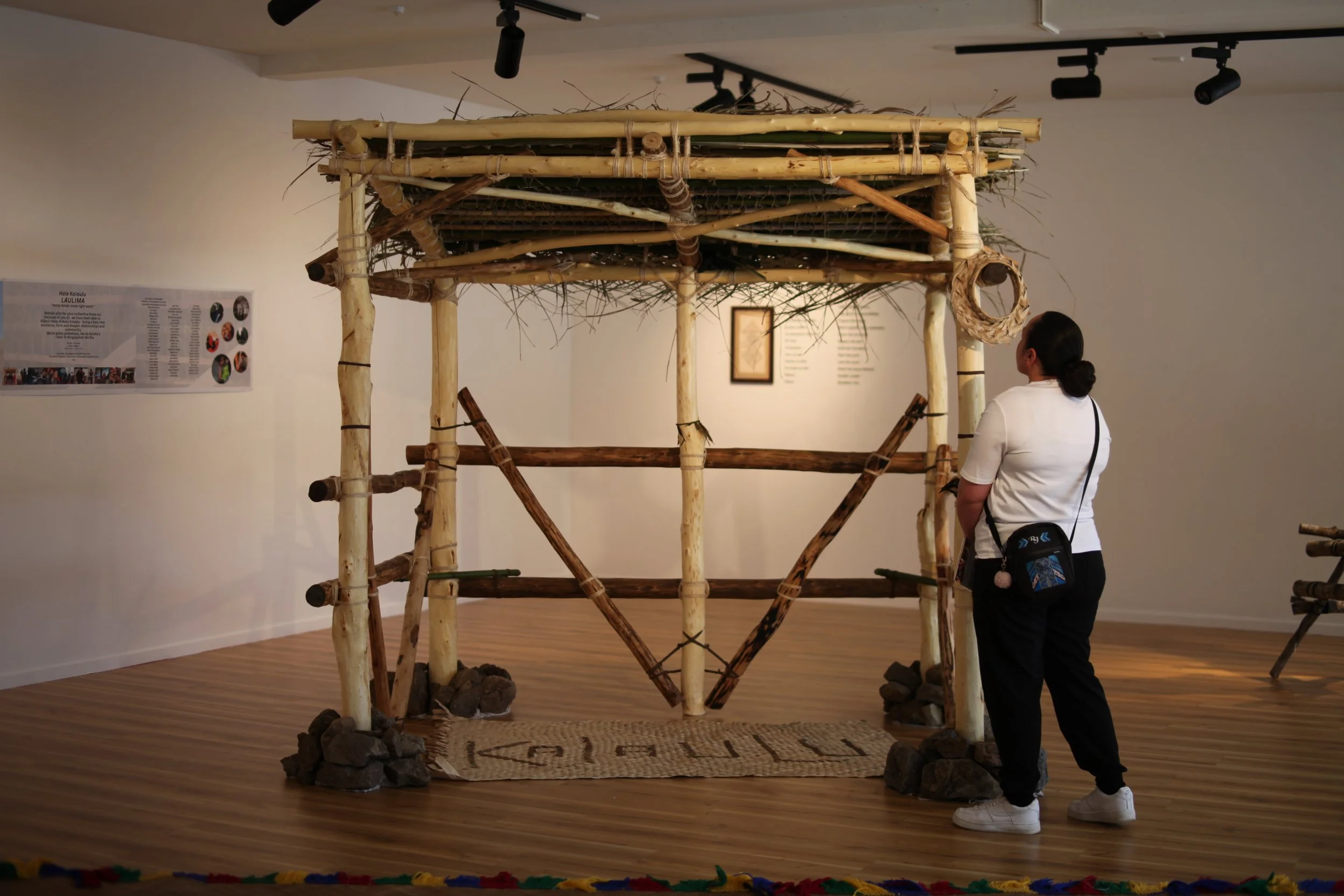
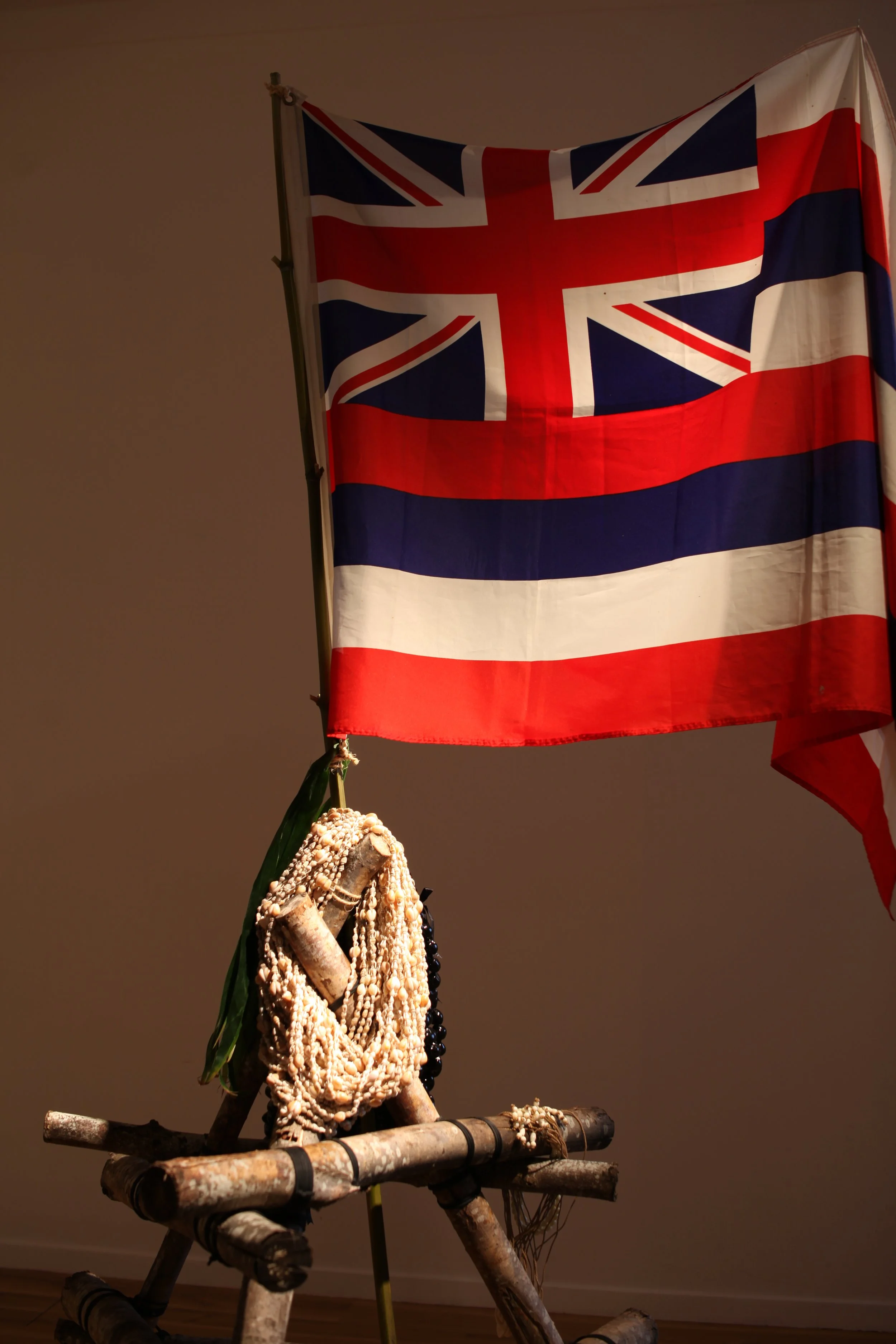
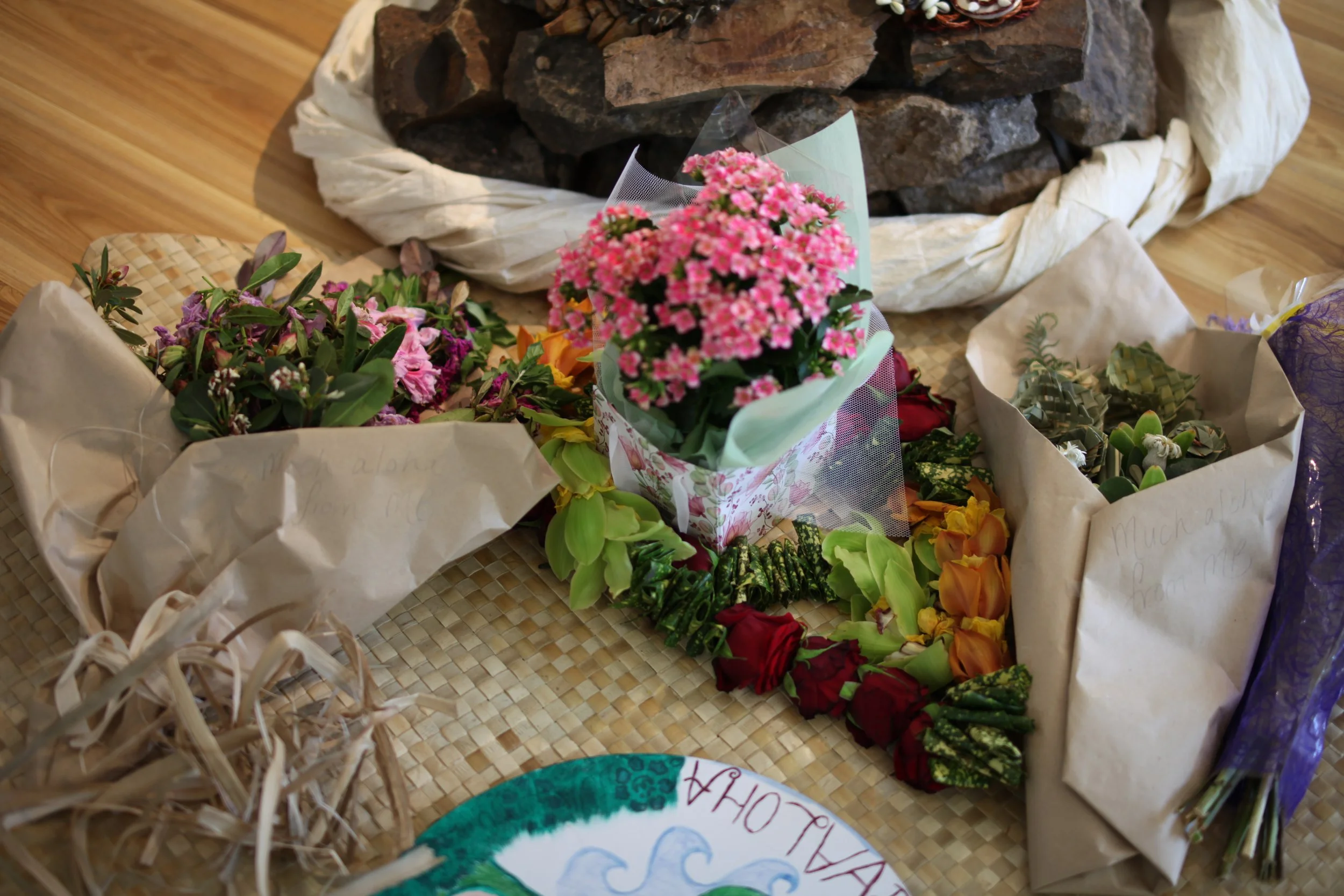
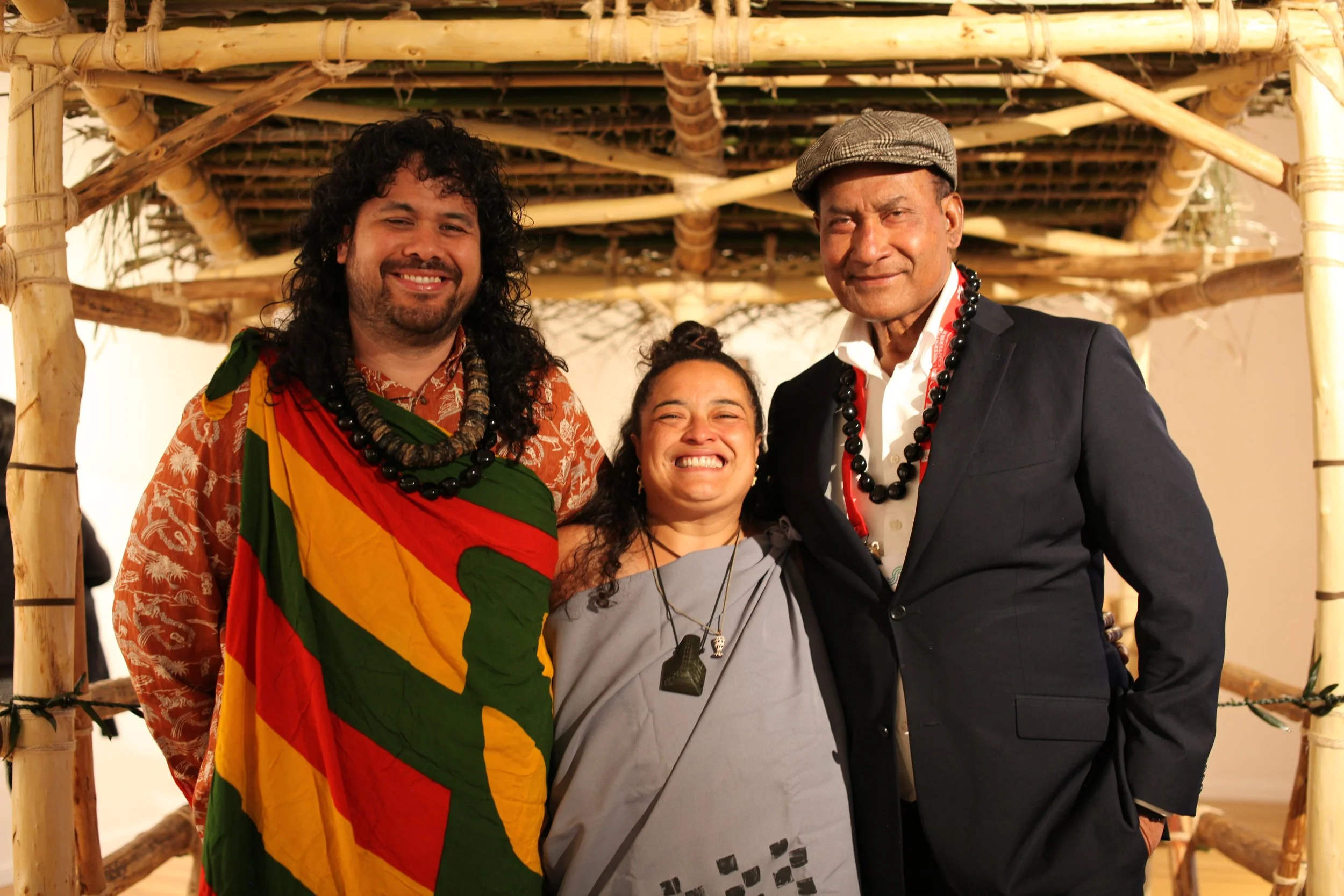
This exhibition celebrates Indigenous Kanaka Maoli engineering, architecture, and the strength of community, drawing on ‘ike kupuna (ancestral knowledge) and natural resources gathered across Waitaha, Te Waipounamu, and Moananuiākea. Kūkulu Hale, Kūkulu Kaiaulu shares the creative process and cultural wisdom that guide Tiana's practice, highlighting the role of art in community empowerment.
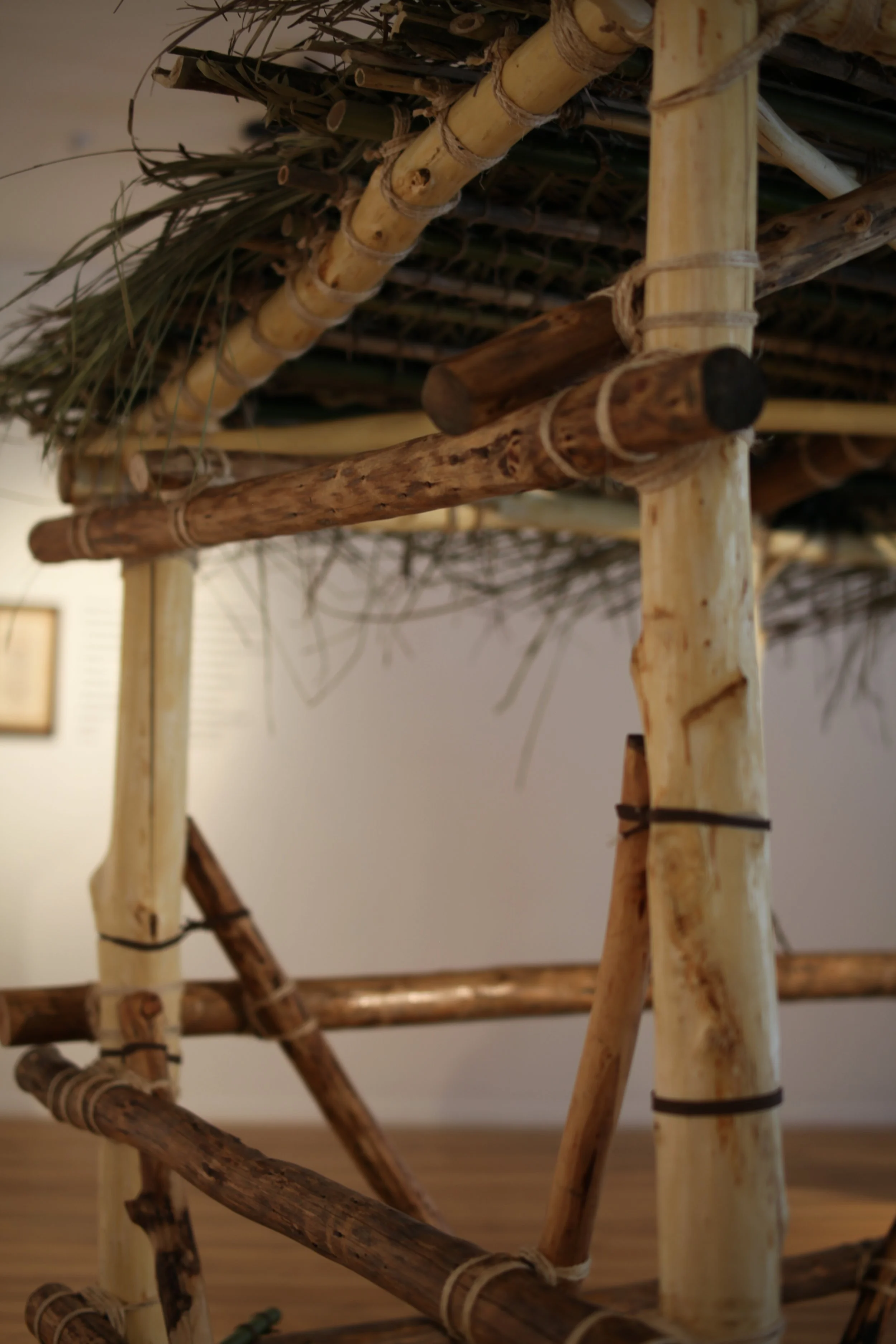
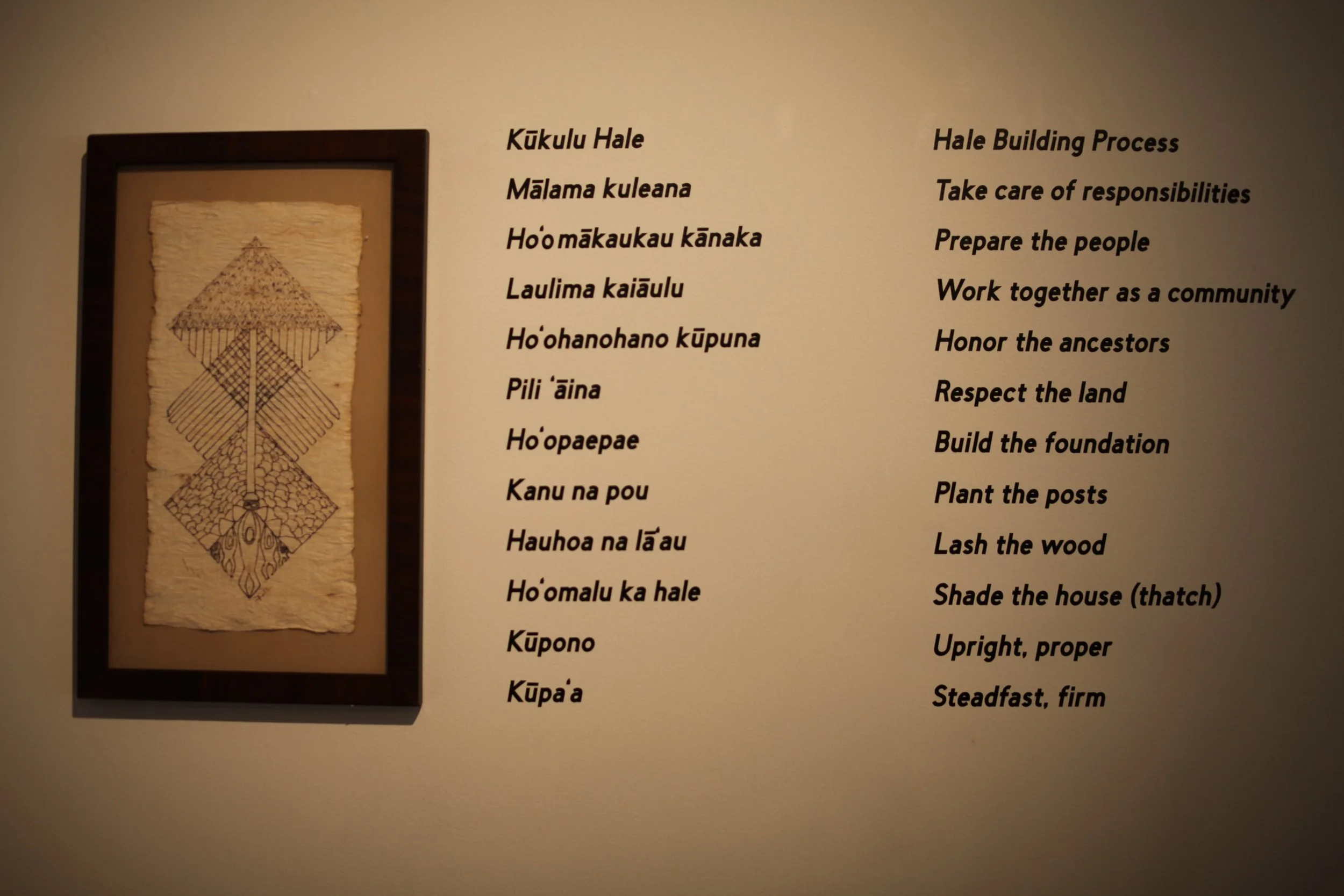
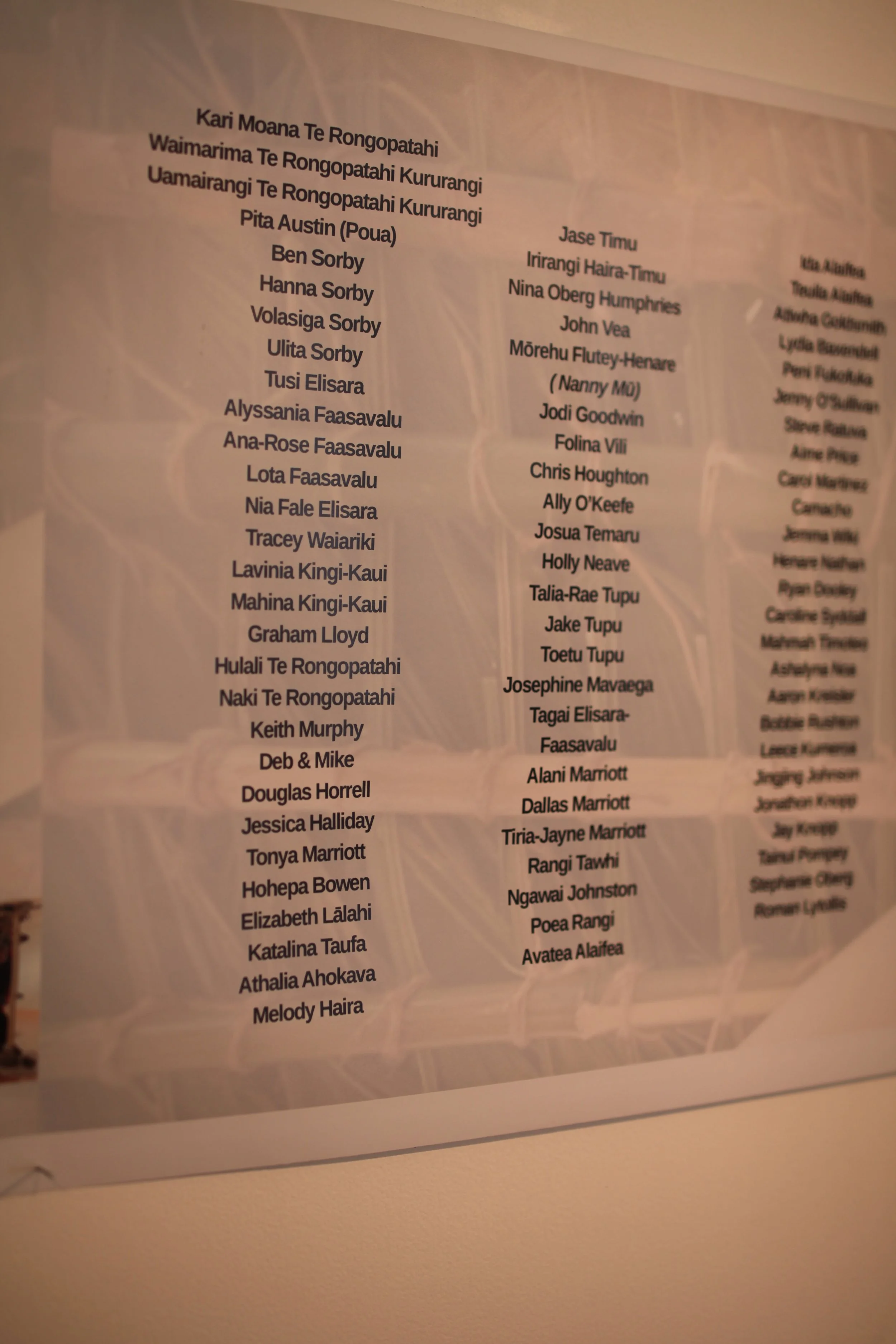
Rooted in the Indigenous Hawaiian practice of kūkulu hale–the traditional art of house building–this project brings together local Māori, Pasifika, and Ōtautahi communities to co-create a hale (house) that embodies laulima (many hands working together) and aloha ‘āina (love and respect for the land). Each component of the structure carries the collective energy of collaboration and care, transforming architectural practice into a living act of ceremony and cultural continuity.
Through this work, Mo’iha reframes building as an expression of resilience and belonging–where ancestral technologies meet contemporary challenges, and where indigenous knowledge systems continue to shape sustainable and connected futures. Fibre Gallery acknowledges the Macmillan Brown Centre for Pacific Studies and Creative New Zealand for their support and commitment to Pacific arts in Aotearoa.
Visit Us
Location
Level 1, 285 Cashel Street
Christchurch Central
Hours
Wednesday–Friday
10am–4pm
Contact
fibregallery@tagatamoana.com