

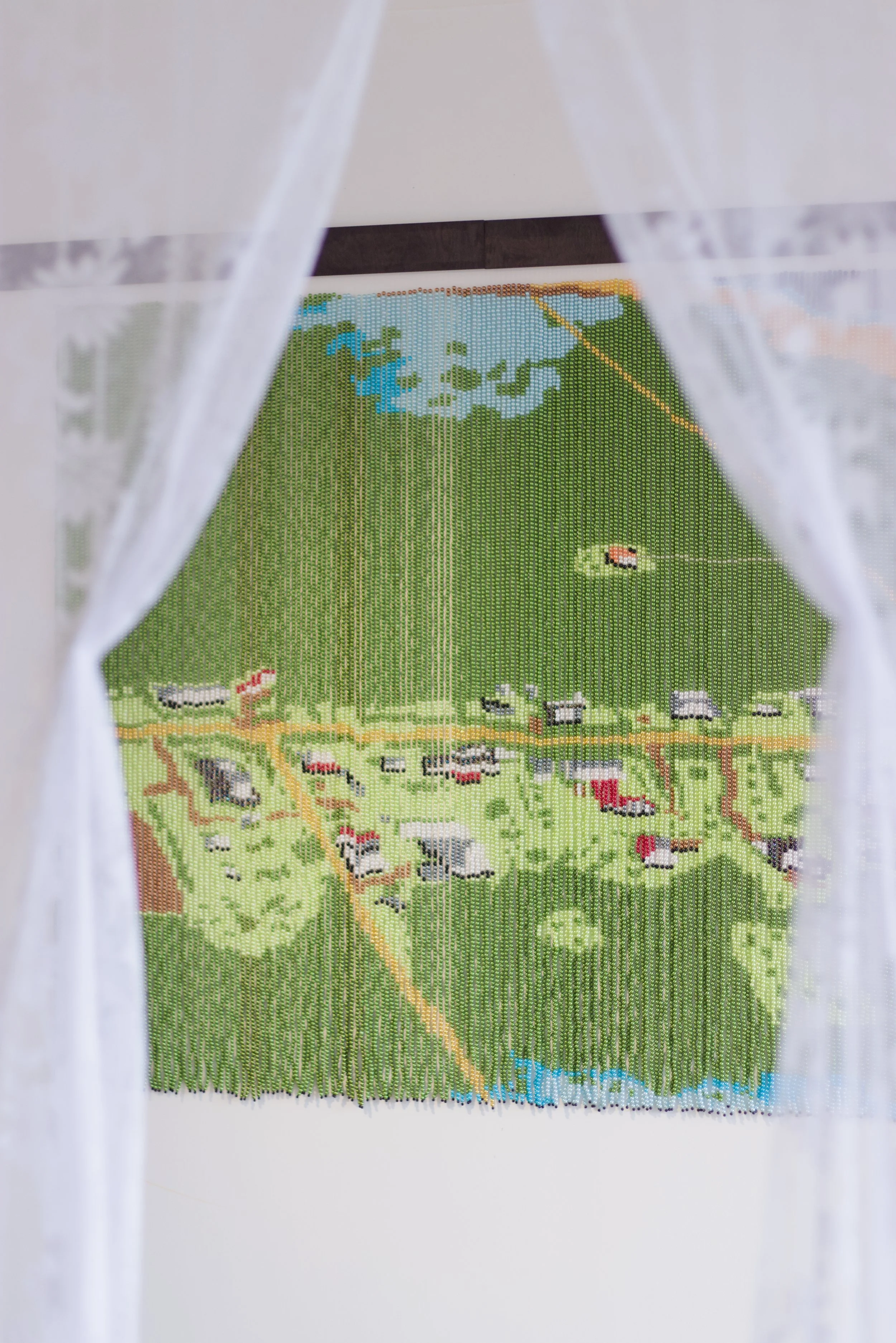
no place like home - Sione Monū
27th March - 1st May 2026
This exhibition by Tāmaki Makaurau based artist Sione Tuivailala Monū looks at state housing in Aotearoa as more than shelter, considering how state housing shapes ideas of who belongs, who is deserving, who is watched. For many Pacific families the state house is tied to migration, survival and opportunity but also to stigma.
no place like home asks you to think about home as both protective and exposed. A place of care, culture and gathering, but also a space shaped by rules, surveillance and limited choices. It considers how culture is carried intergenerationally, shaped by both pre and post migration experiences, and maintained through secondhand memory. What is inherited, what is adapted and what is lost or reshaped through displacement all sit within the walls of the home.
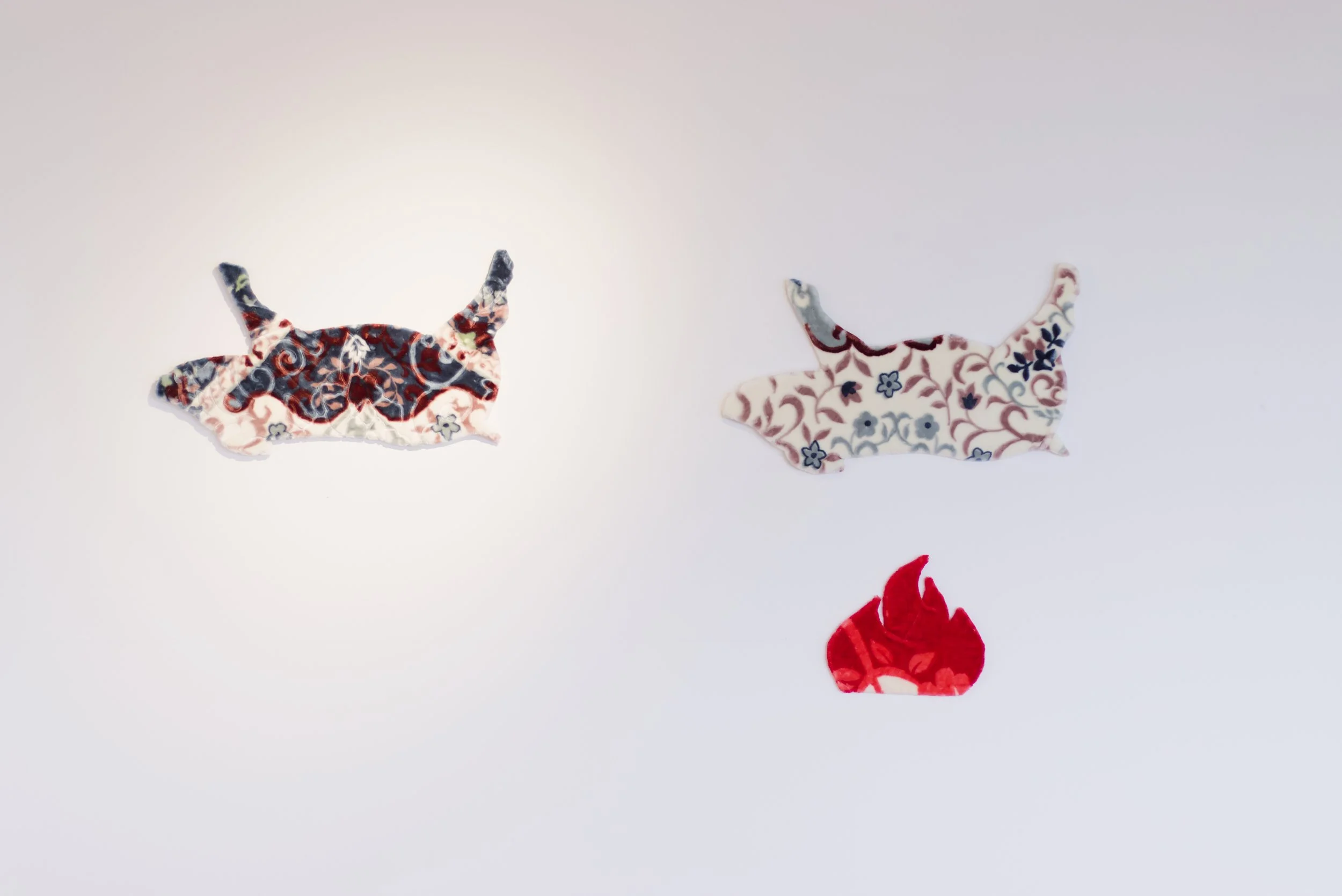
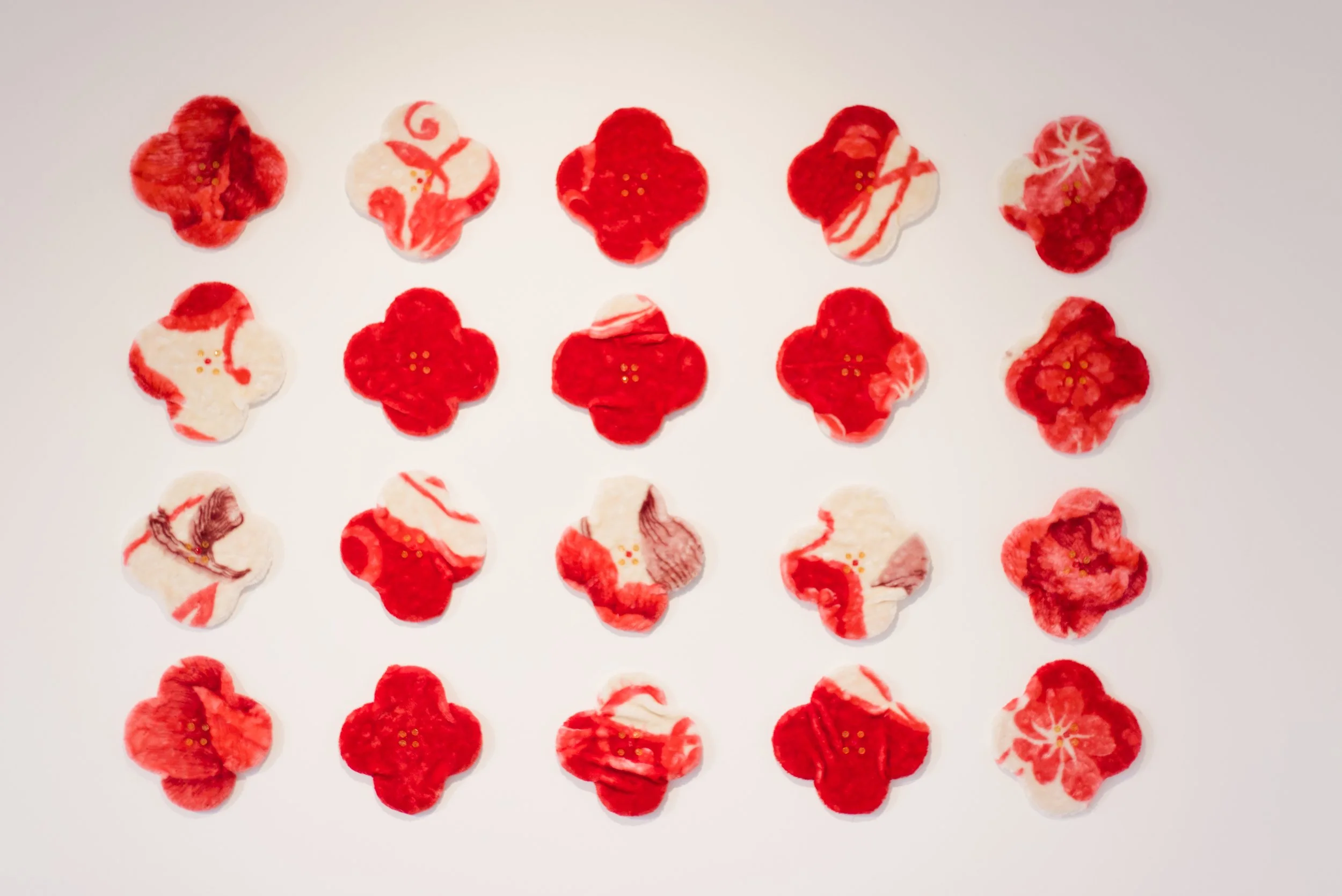
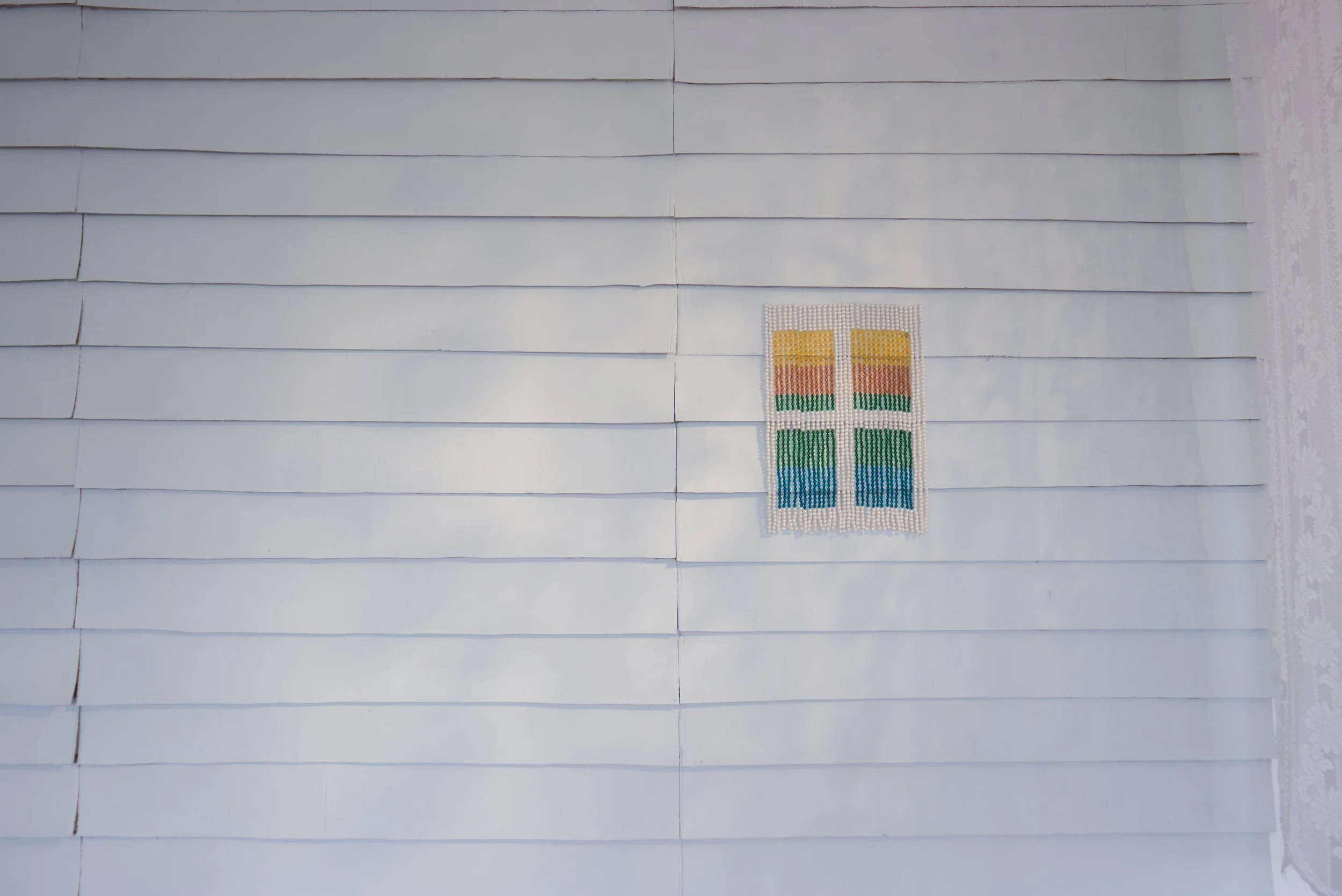
Sione's pieces — such as the pig on a spit, the kiekie, the weatherboarded exteriors and references to ancestral land — speak to continuity and adaptation. They hold memory and connection while also revealing what shifts or becomes fragile through displacement and economic pressure.
Monū reflects how domestic spaces carry layered meanings: comfort and control, intimacy and scrutiny, pride and shame. The work asks how colonial systems and housing policies continue to shape everyday life inside the home.
At its core sit the uncomfortable questions that interrogate the ethical viewer: Who gets to feel secure? Who is made visible? And how do we participate in the stories told about state housing and the people who live within it?
Artist Bio
SIONE TUÍVAILALA MONŪ (they/them) is an interdisciplinary artist of Tongan descent. Monū was born in Tamaki and grew up across Australia as their father was part of the Australian defence force. Their mother is a Tongan cultural knowledge holder and avid collector of Tongan crafts, adornments and ngatu (bark cloth). As a child, Monū enjoyed experimenting with materials mimicking cultural adornments, having watched family in Australia making traditional adornments with non-traditional diasporic materials like beads. Monū developed early their own interpretations of the craft.
Not considering their current practice "traditional," Monū deems their works modern iterations of their heritage based on their present-day reality. Each work depicts a symbol of self: self in community, self in love, self in relation to family, and self-referential humour. Traditional methods blend diaspora in-jokes and personal omens. There are callouts to Monū's queer Pacific creative collectives and friendships, and often derided elements of Pacific identity and aesthetic articulating core parts of Monū's identity.
Monū has shown their work nationally and internationally, including National Portrait Gallery Canberra, Artspace Sydney, Artspace Aotearoa, Waikato Museum Te Whare Taonga o Waikato, Contemporary Jewelled Art Gallery & Museum Cagnes-sur-Mer France, Perth Institute of Contemporary Arts, Auckland Art Gallery Toi o Tāmaki, Christchurch Art Gallery, Māngere Art Centre, Robert Heald Gallery and Bergman Gallery. Monū has art held in numerous public collections including Auckland Art Gallery Toi o Tāmaki; Christchurch Art Gallery Te Puna o Waiwhetū; Ngā Puhipuhi o Te Herenga Waka—Victoria University of Wellington Art Collection; Auckland Libraries Archives; and various private collections throughout New Zealand and abroad.
Additionally, Sione has been featured in publications such as Crafting Aotearoa: A Cultural History of Making in New Zealand and the Wider Moana Oceania (2019), Landfall Journal (May 2022), Pacific Arts Aotearoa (2023), and Sio FakaTonga 'ae 'Aati FakaTonga - Tongan Views of Tongan Arts (2025).
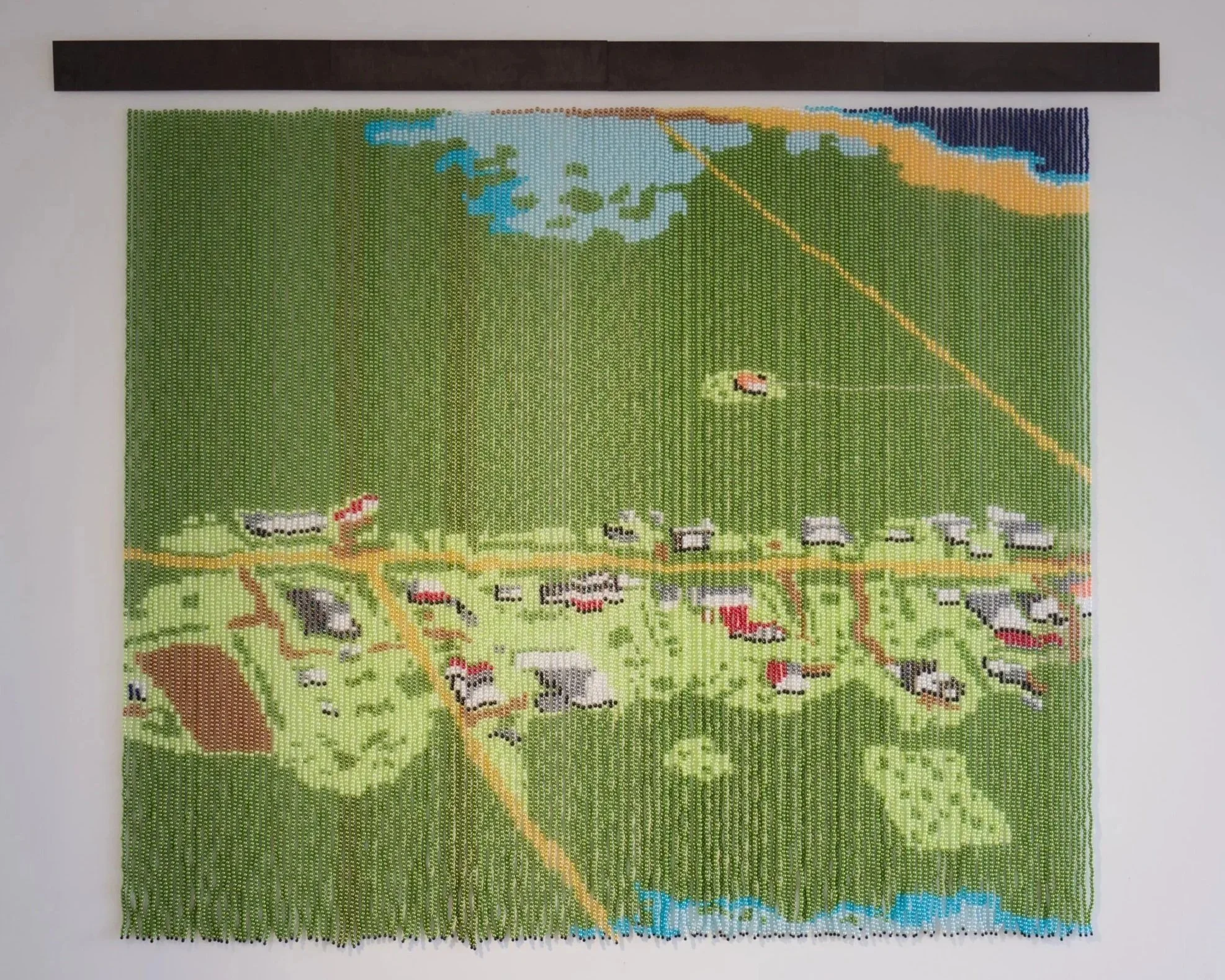
The Yellow Brick Road Our Parents Built
By John Vea
When Sione Monū talks about Yellow Brick Road, they are not simply talking about a village. They are talking about a place that exists through memory, family, and stories. The work depicts Kanokupolu, their father’s village on Tongatapu, Tonga, and began with an image they found through Google Maps shortly after the 2022 Hunga Tonga-Hunga Haʻapai volcanic eruption and tsunami. The satellite image captured the impact of the disaster, showing a landscape where many homes had been destroyed and the familiar surroundings of the village had been transformed by the force of the ocean.
Kanokupolu stretches between two coastlines, and this is reflected in the work through the water represented at the top and bottom of the piece. However, Yellow Brick Road is not simply a reconstruction of what was lost. Instead, Monū rebuilds the village through memory. They place the houses back into the landscape based on their own experiences of visiting Kanokupolu throughout their life. It is not intended to be an exact map, but rather a personal remembering of a place connected to ancestry, family, and belonging. As Monū describes it, the work is “a memory of a memory” (Fibre Gallery, 2024, 1:27).
This idea of memory is important because places are not only made up of buildings, roads, and landscapes. They are also made from the stories and experiences of the people who belong to them. Through Yellow Brick Road, Kanokupolu becomes more than a physical location. It becomes a place carried through generations, remembered through family, and reconstructed through imagination.
The work was exhibited as part of Fibre Gallery’s exhibition no place like home. The title immediately brings to mind Dorothy’s journey in The Wizard of Oz (Fleming, 1939), where she follows the yellow brick road in search of a way home. The yellow brick road becomes more than just a pathway; it becomes a symbol of longing, journey, and the desire to reconnect with a place of belonging. Dorothy’s journey reminds us that home is not always simply a physical destination waiting at the end of the road. Sometimes home is something we discover through the memories, relationships, and experiences we carry with us.
For many Pacific people living away from their ancestral homelands, this idea of home can be complicated. For those of us born in places our parents migrated to, our understanding of home often begins through someone else’s memories. We learn about the homeland through stories told around the dinner table, through family photos, food, language, songs, and the experiences our parents carry with them. In many ways, our parents create the yellow brick road before us. They build pathways through their own memories and experiences of home, and we follow these pathways trying to understand where we come from. We inherit stories about places we may not have visited, creating images of a homeland that exists somewhere between reality and imagination.
Some of us are fortunate enough to visit the motherland when we are younger and begin creating our own memories of that place. For others, the homeland remains something we imagine through the stories and memories of our parents. We yearn for this “no place like home”, not always as a physical destination, but as a feeling shaped by the places our families remember and the histories they carry. Like Dorothy following the yellow brick road towards Kansas, we follow the pathways created by those before us. We search for connections to places that have shaped our identity, even when those places may first exist only through stories. The journey is not always about arriving at a specific place, but about understanding how home travels with us.
This connection becomes even more meaningful when we consider the history of Kanokupolu itself. Located in the Hihifo district on the western coast of Tongatapu, Tonga, Kanokupolu holds an important place within Tongan genealogy and history. The name Kanokupolu, meaning “Heart of ʻUpolu,” acknowledges the Samoan ancestry of Ngata, the founding ancestor of the Tuʻi Kanokupolu dynasty. According to Tongan oral traditions, Ngata was the son of Tohuʻia, a Samoan taupou and daughter of the war chief ʻAma of Safata, ʻUpolu. Following conflict in Samoa, Ngata and their followers migrated to Tonga, establishing the Kanokupolu lineage and becoming part of the chiefly history of Tonga. This history reflects the long connections between Tonga and Samoa, showing how migration, genealogy, and relationships have always shaped Pacific identities (Bott, 1982; Māhina, 1992; Rutherford, 1977).
The story of Kanokupolu is itself a story of movement and connection. It reminds us that Pacific histories have always been shaped by journeys across oceans, by people carrying knowledge, relationships, and memories with them. In this way, Monū’s Yellow Brick Road connects personal memory with a much larger story of migration and belonging. Through this work, Monū is exploring how people carry home with them. Home is not always a place we simply return to. It can be something we create through memory, storytelling, and connection. Like Dorothy following the yellow brick road, we are guided by the stories and experiences of those who came before us. The road may lead us back to ancestral lands, but it also leads us towards a deeper understanding of who we are.
In The Wizard of Oz, Dorothy eventually discovers that the place she was searching for was connected to what she already carried within herself. In a similar way, Pacific diaspora communities discover that home is not only found in a physical location. It exists in our relationships, our memories, our ancestors, and the stories that continue to travel with us. Monū’s Yellow Brick Road is therefore more than an image of Kanokupolu. It is a pathway between past and present, between ancestral memory and lived experience. It reminds us that places can survive through the people who remember them, and that home can travel across oceans, generations, and stories.
References
Bott, E. (1982). Tongan society at the time of Captain Cook’s visits: Discussions with Her Majesty Queen Salote Tupou. The Polynesian Society. Fibre Gallery. (2024). Interview with Sione Monū discussing Yellow Brick Road [Unpublished video]. Fibre Gallery. Google Drive. Fleming, V. (Director). (1939). The Wizard of Oz [Film]. Metro-Goldwyn-Mayer. Māhina, ʻO. (1992). The Tongan traditional history Tala-e-Fonua: A vernacular ecology-centred historico-cultural concept. The Journal of the Polynesian Society, 101(3), 289–305. Rutherford, N. (1977). Friendly Islands: A history of Tonga. Oxford University Press.