

TENSEGRITY- Sina Leo
May 8th - 5th June 2026
Sina Leo visits Fibre Gallery with a vignette of scenes tracing the lines between transactionalism and ethical maintenance in Aotearoa.
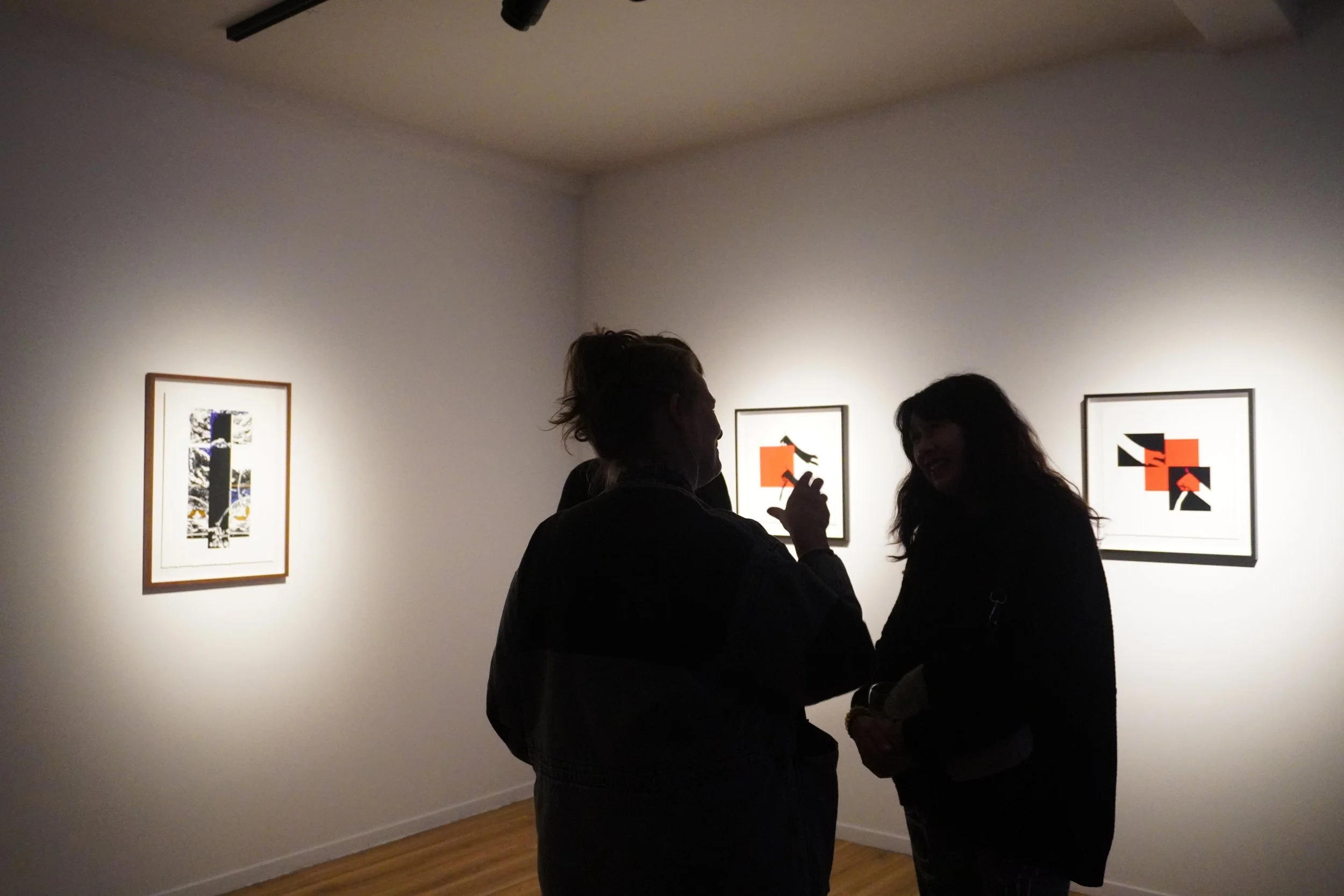
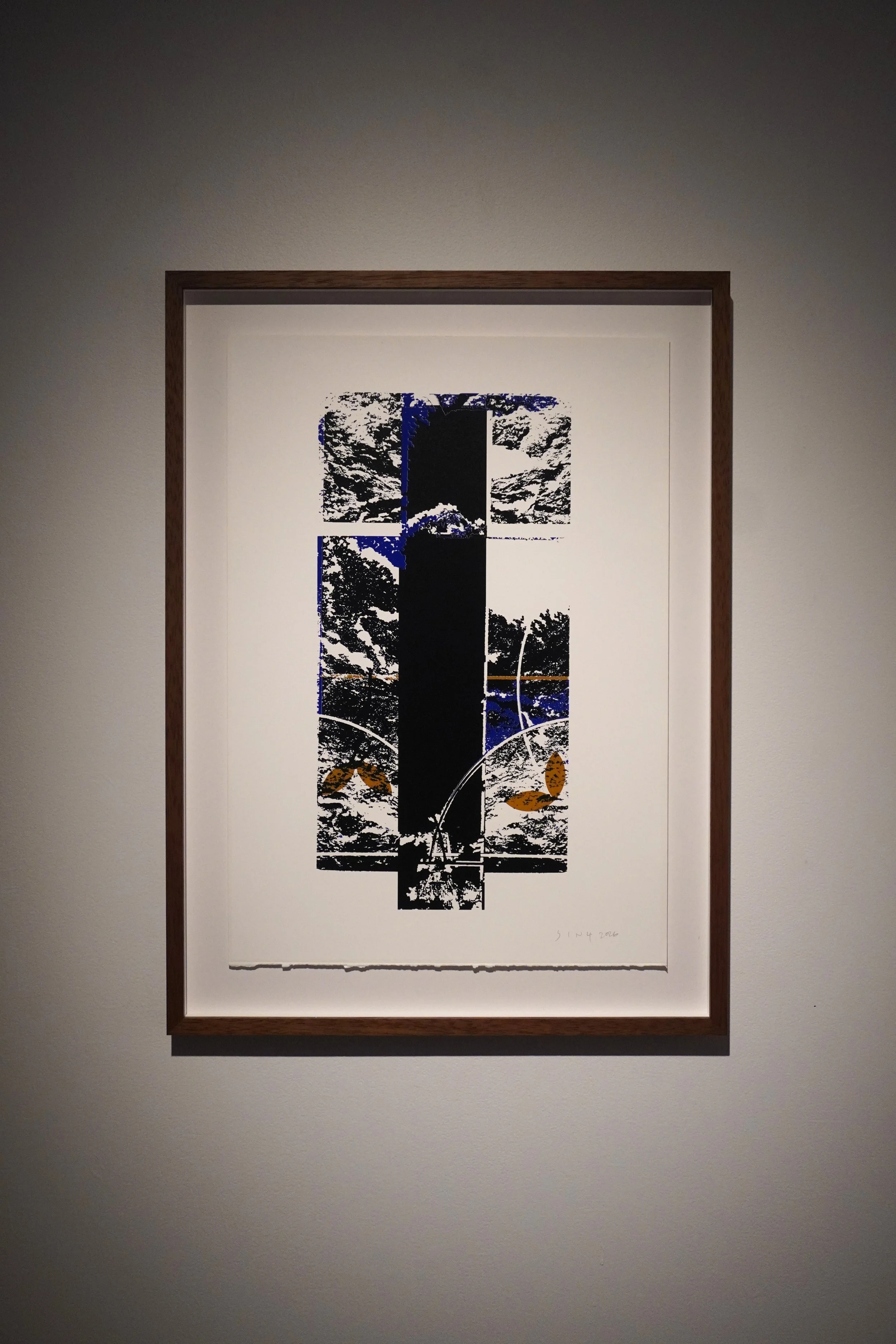
The collection within TENSEGRITY weaves visual language building and motif transformation to explore the implications of violence within societies. Her work here navigates connections that underpin events and circumstances in order to comprehend the shifting of emotional landscapes over time. Sina Leo's practice stretches between avant-garde cinema, capturing moving images in sparse landscapes, the enigmatic forms of nature and the ominous presence of the human-made. She reflects further with serigraph interpretations of the short films and builds soundscapes to accentuate viewer immersion.
Sina Leo is an artist based between Te Tai Tokerau and Tāmaki Makaurau. Inspired by movement, light and time, her avant-garde film work increasingly drifts between the tangible and abstract. Having spent much of her early life exploring the vastly changing landscapes of Aotearoa, her greatest collaborator and source of metaphoric language is the natural world. Constantly, her work explores aspects of the inner experience through this, challenging the notion of separation and enquiring upon the unstoppable evolutions and transformations of the human.
Artist Bio
SL is an artist based between Te Tai Tokerau and Tāmaki Makaurau. Inspired by movement, light and time, her avant garde film work increasingly drifts between the tangible and abstract. Having spent much of her early life exploring the vastly changing landscapes of Aotearoa, her greatest collaborator and source of metaphoric language is the natural world. Constantly, her work explores aspects of the inner experience through this, challenging the notion of separation and enquiring upon the unstoppable evolutions and transformations of the human.
TENSEGRITY AND UNIVERSAL LANGUAGE
Solomona Davis, in response to Sina Leo’s Tensegrity (Fibre Gallery, May 2026).
Before you, a black theatre: vānimonimo folds in on itself. The abyss, kneading viscous liquid sheets of potential and nonpotential, of direction and indirection. Then division, then pairing, then the clang and clamour of birth. Kneaded til supercompressed, then mixed with the dry ingredients. Reminding you this taking-shape of yours has taken bloody ages.
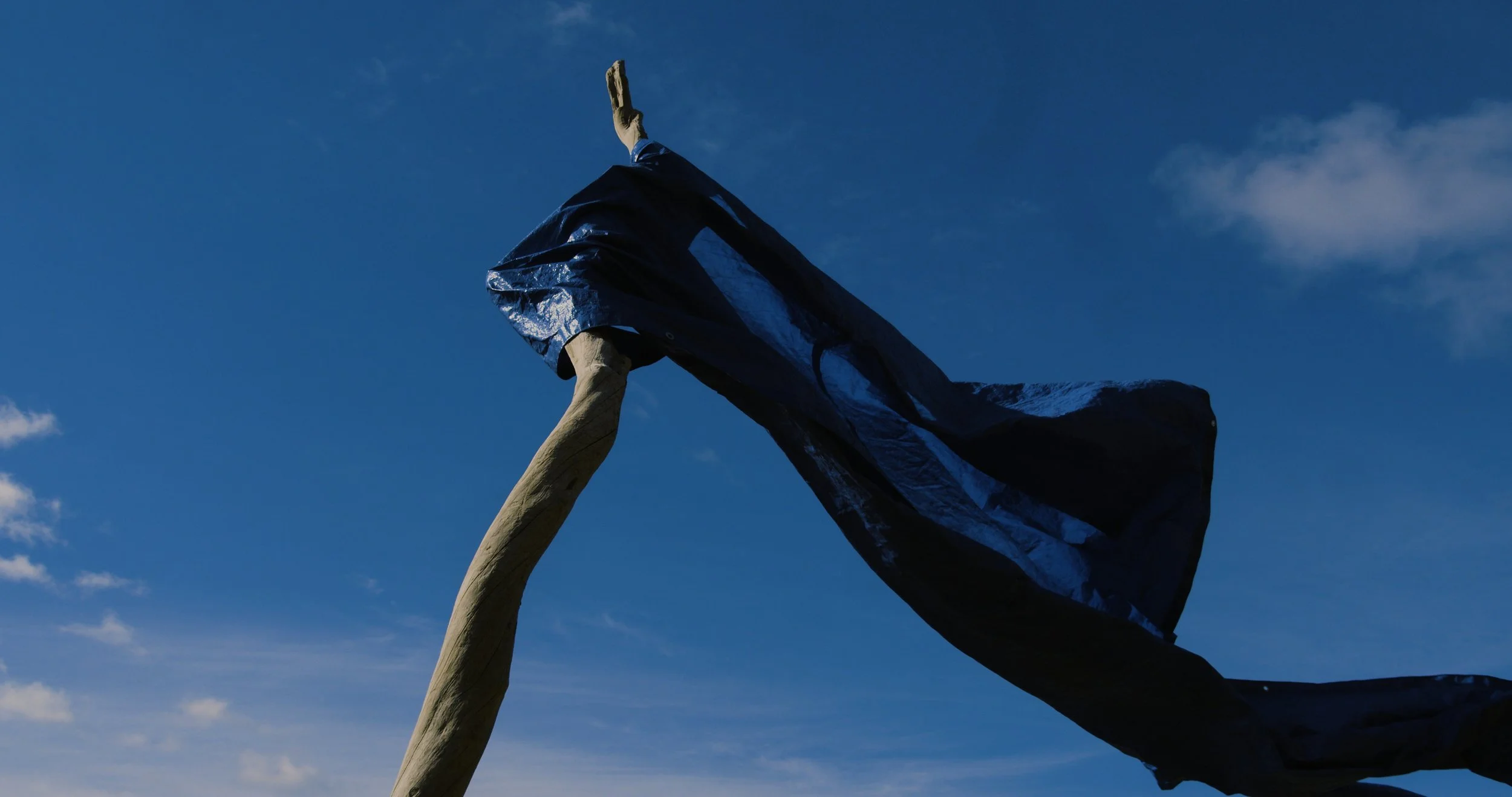
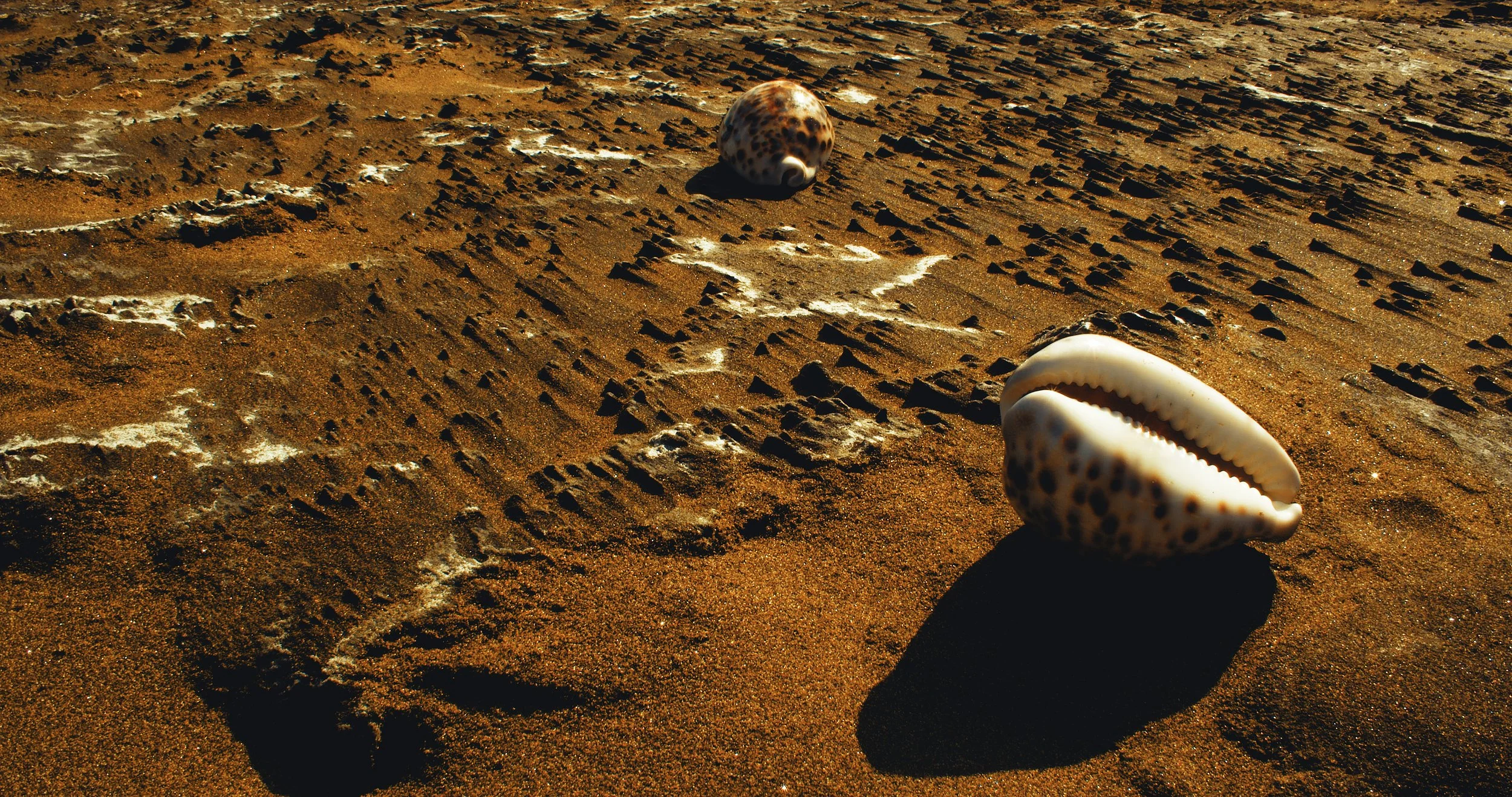
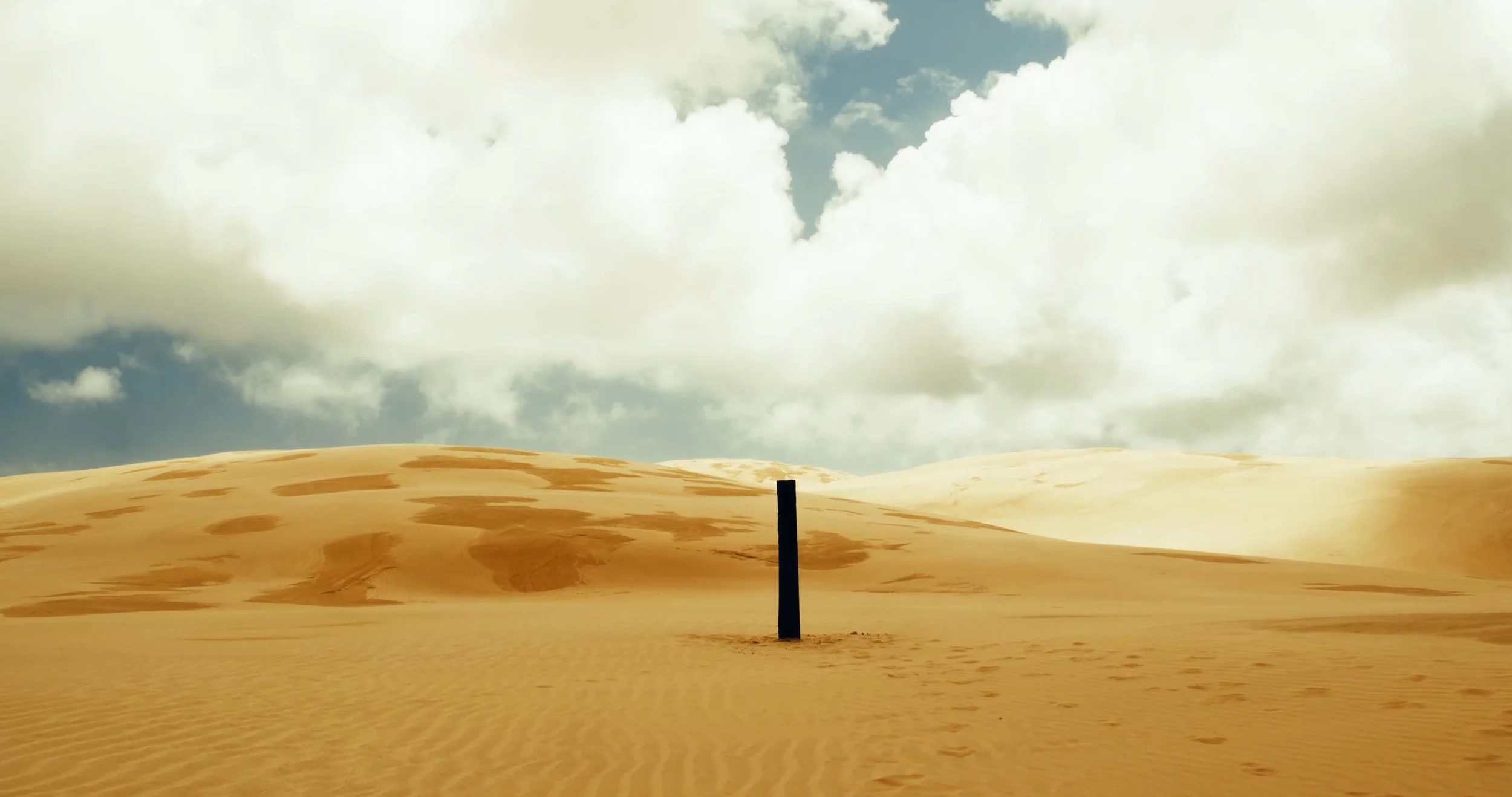
Here between times and forms, fluid and solid, particle and wave. A tattered tarpaulin flag stakes its claim on sand dunes in the rain shadow of Te Rēinga, of Le Fafā, great highway of the spirits. The flag humiliates itself, flogs itself before this red world spinning on around it, unflinching. Sand pushes on for higher purposes – flies far above the colours, so fast it appears not to move.
The sand is eternal, is complete. It does not claim the flag back. The sand moves through it. The blue tarp, alone, appears bound to obviousness, moves with time-as-we-know it. A beetle, a fly, a trick of the eye blurs itself in and out of familiarity. All else in motion but our driftwood flagstaff, centre frame – tarp clinging on like a health and safety requirement. Like God of Nations, traffic light, literacy test. The desert replies: why are you here? Is there something you can do to make yourself less useful, more cohesive?
Ask any man in a button-up shirt and history begins with the written word – developed independently only ever four times: Sumer, Kemet, Huaxia, Olmec. Rongorongo, some say, the fifth, well. There again are those who say that marking is as old as having. And that having, although only ever a trick of the eye, has been imagined for as long as knowing.
From the dream of having, there came the mark to stake its claim. And anything we dreamt we knew, we drew. On stone, on skin, bark paper, bone. By stylus, by chisel, fingernail, flower pigment, letterpress.
And so on into a thousand wriggling forms. Old marks, known and unknown, once so clear and heavy in your palm, through time hollowed out by the wind of familiarity – companion of apathy, usher of death. And grasped at blindly now, through theses and forums we thrust out into chaos, to measure and dissect. So on into this red threaded web of protected and obfuscated meanings.
So to say we live in monuments built to our unhealthy obsession with knowing. And that yes, it is fine, that all we have is to not know. And that we only dreamt of knowing. And that we held this dream in a web – and as webs do, because we stretched and snapped it, it was gone. The fly, gone free, and we, the maggot left to wriggle.
On the right moon, for a flash, see this web re-woven. Mended, appended, fabric stacks, loomfuls of knowing and not-knowing. Threading something. A surface tension of nearly-but-never spilling over.
See each symbol catch and suspend stray molecules of this sandstorm passing through you and what they have to say. See how any attempt to capture the fullness of language is beguiled by its god-given slipperiness.
Each of these things, their individual grace and their janky, scraping intersection – all here become a skin for the world’s markings to make home in.
Machine markings in the cereal we consume. Phoneburn on our thumbs. Scrimshaw on whalebone. Tensegrity in the language between us. Tensegrity in your gut. Marked down, marked A+, marked to kill. Feel the ‘au tatau of the order of things mark you in your place – show you again what it means to be in service of your surroundings.
Your language, my friend, is as easy to read as star clusters – all you have to do is squint, recontextualise your size, draw imaginary lines, trace movement through time against your own birth, place yourself against its heliacal rise and behold.
Part of shapeshifting back into the self you should be and the language you should have is learning to share the first thing the real you thinks.
So in the spirit of this pursuit of an integrity that holds together our tensions, here is what the real me thought on first encounter with these delicately counterbalanced works.
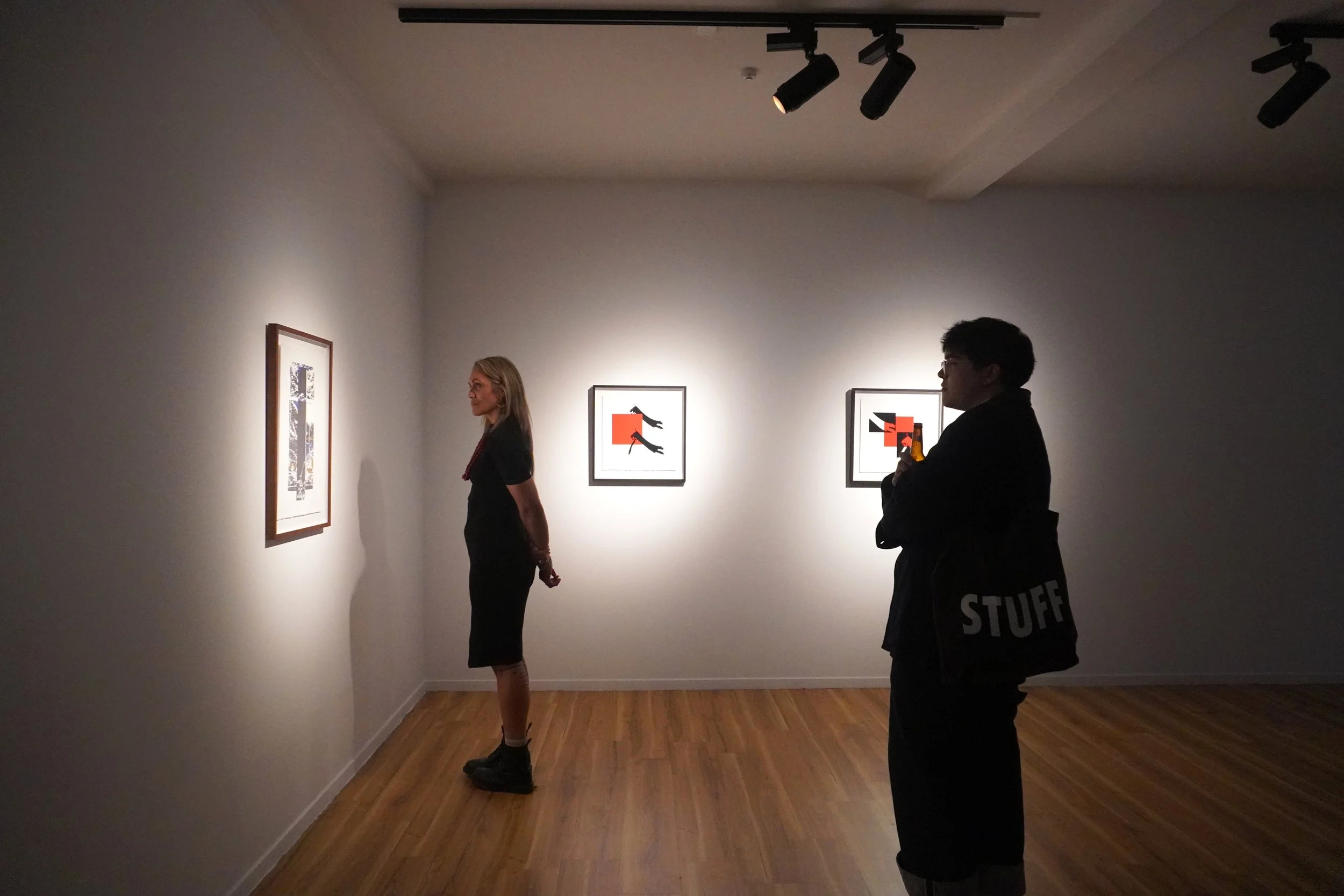
Sina Leo’s Tensegrity presided over Fale Eke, house of octopus and fibre and, on nights like this, a precious belly-fire, something like home. In black-white-red script of mamanu abstraction, the walls (which I am only beginning to understand) read:
trace the vā between fetū
thumb, forefinger, a tilt, a lean.
it is as we name it: space, and yet
none at all, it is thrum, it is moped intersection
between each godhead a puma-black
stampede of story
and the wrestling of the characters
over waves’ roar and rampage
this giving taking soup that lends us to ourselves
shares spare glimpses, stick-‘n’-pokes open
the flesh of heaven staring back at us, we name it
after all our dead, we know it
names us right back
when you were born you said you came from
tōfā – and now I know that means to sleep, to dream
you said they sent you here to say
something you have now forgotten
but said that I could ask them later
I try not to look at the mirror in the back of the storage room
thumbing over your old drawings in the space that now lacks you
I trace the vā, thumb, forefinger, squint
and the space is filled
puma-black waves, soup flesh, tōfā